AI Skin Analysis Demo That Cut Sales Pitch Time By 40%
Project Overview
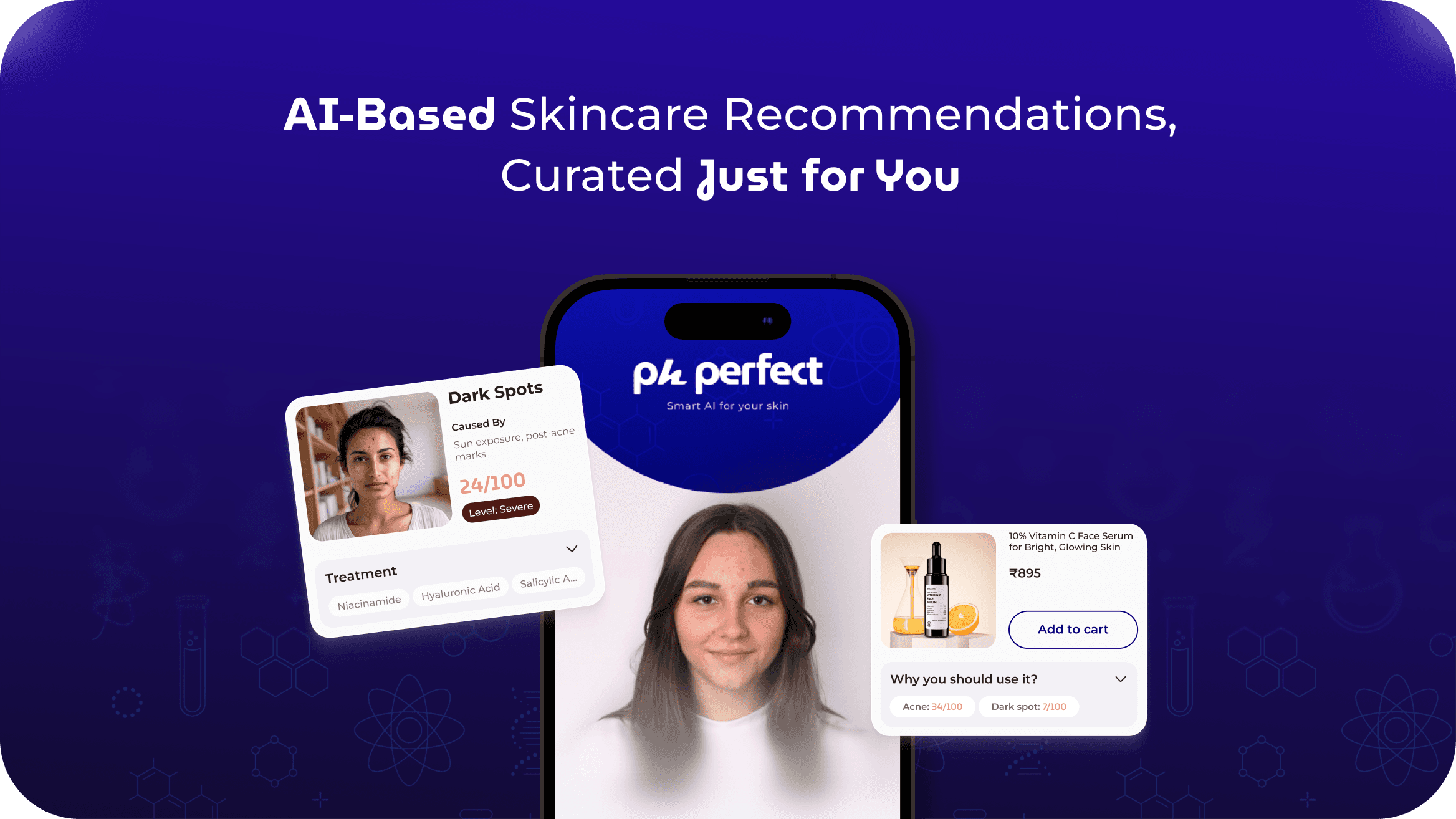
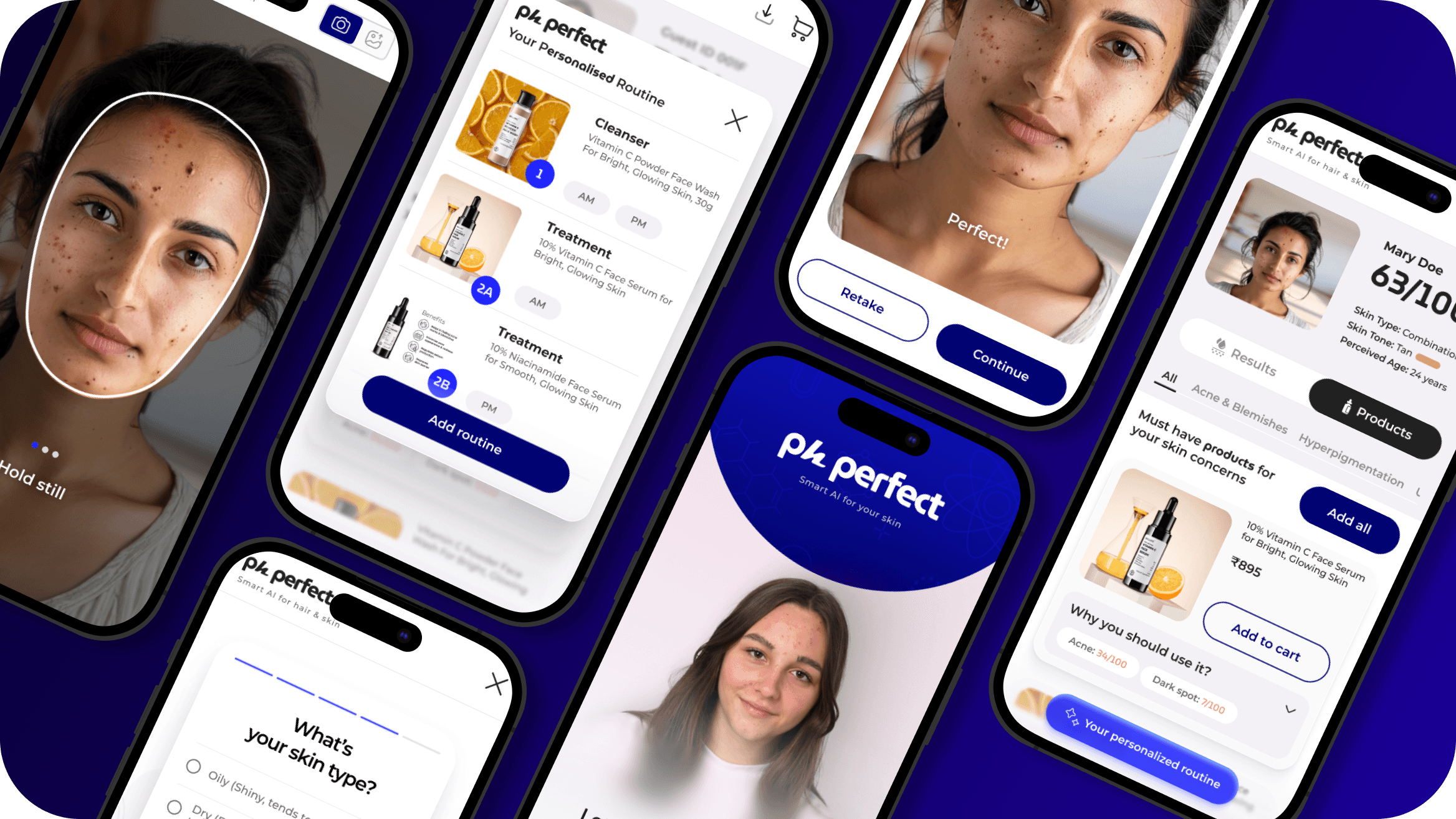
ph perfect is a mobile-first prototype designed to productize Ctruh’s AI skin analysis technology. It translates complex backend data into a clean, consumer-facing interface, giving sales teams a tangible tool to demonstrate value to beauty brands instantly.
Mobile Design
AI Interface Design
Rapid Prototyping
Branding
Role
Design Lead
Team
1 Product Manager,
1 AI Engineer,
1 Frontend Dev
Timeline
4 Weeks
Tools




Goal
To transform raw, complex AI technology into a seamless consumer-facing mobile app that allows sales teams to demonstrate skin analysis capabilities in under 60 seconds.
Constraints
Building Trust with Data: The challenge of designing the results page to feel professional and "medical-grade" so users trusted the AI's analysis of their sensitive skin data.
Visualizing Complex Data: Translating raw AI metrics (like skin age, texture, and acne scores) into a clean, easy-to-read report that sales reps could explain at a glance, avoiding information overload.
Impact
40% Faster Pitches
Drastically reduced explanation time, allowing clients to "experience" the tech instantly rather than watching a slide deck.
3 New Brand Wins
The prototype was the key differentiator in closing contracts with three major beauty brands in the first month.
Before ph perfect , CTRUH had no convincing way to show its AI, and existing market tools were cluttered, confusing, and delivered results users couldn’t decode.
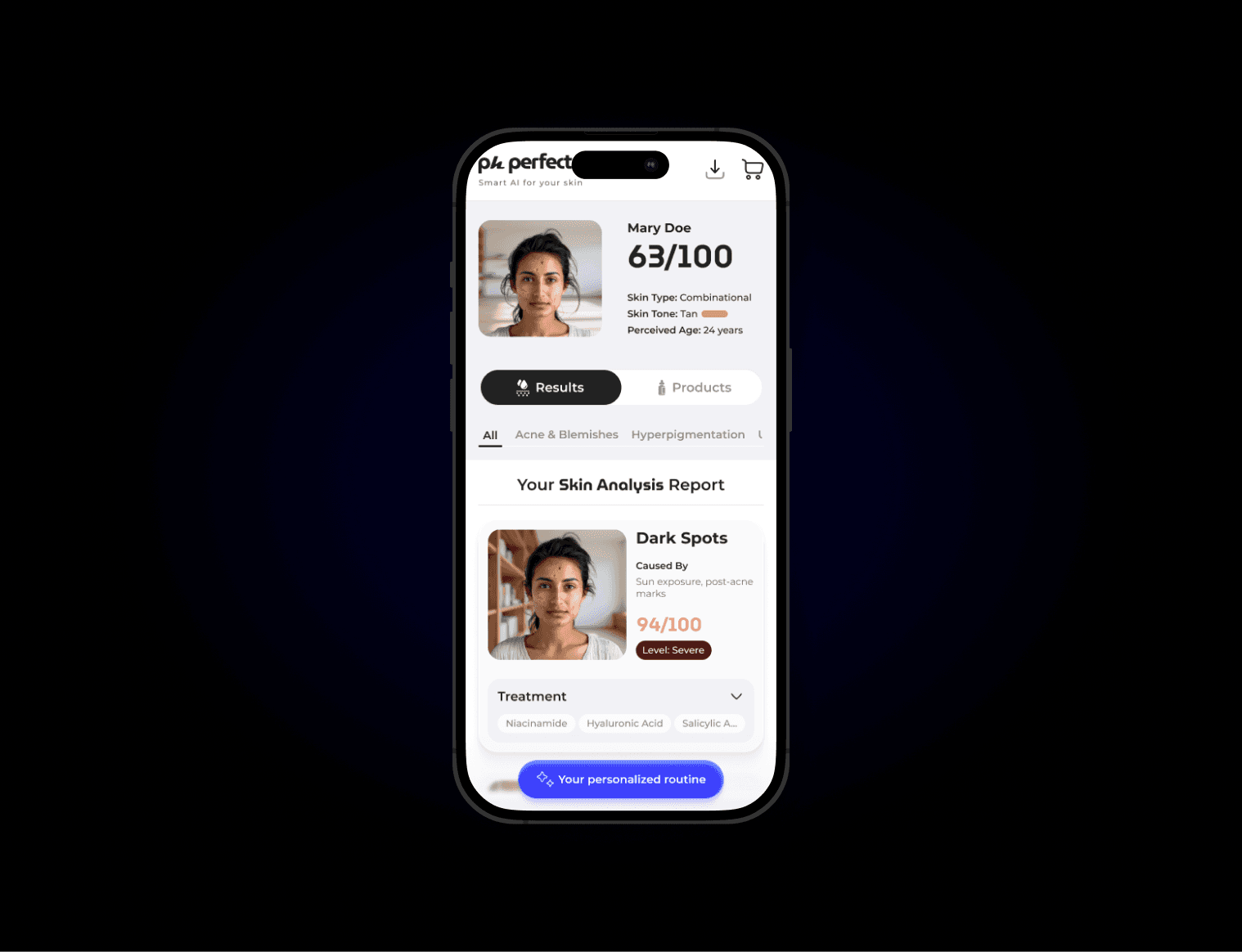
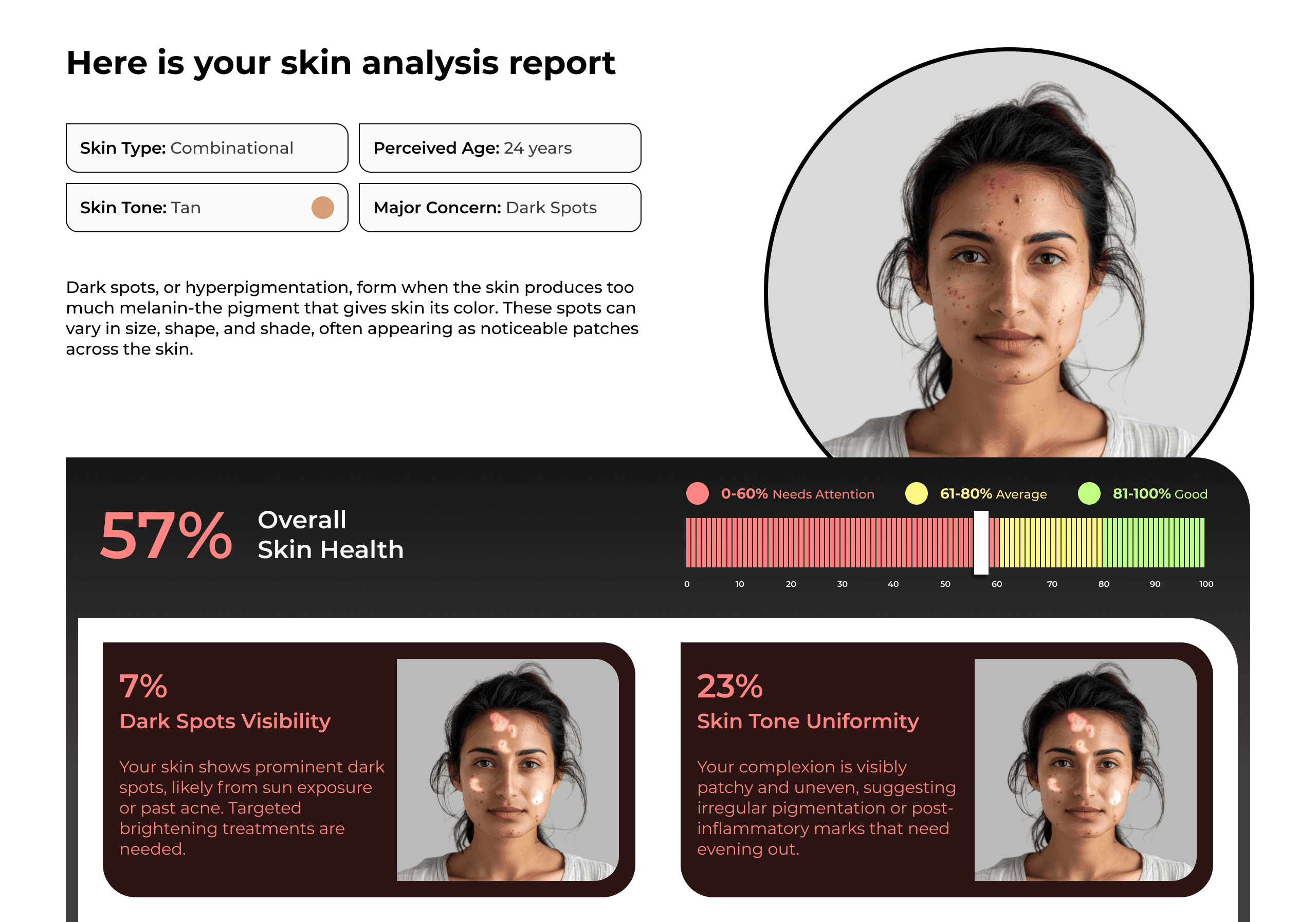
After ph perfect , our under-a-minute prototype translated the diagnosis into intuitive scores, simple questions, and clear reasoning behind every treatment—helping us stand out and attract more clients with reports that clearly demonstrated future potential.
We initially built a custom AI demo for a skincare brand, but the failed deal revealed a crucial flaw: The Lack of Scalability
"Every brand needed a new demo. Every demo looked different. Nothing was scalable or consistent."
This realization drove our core question:
What if instead of building one-off experiences, we built a single, fast prototype that could clearly show what our AI was capable of?
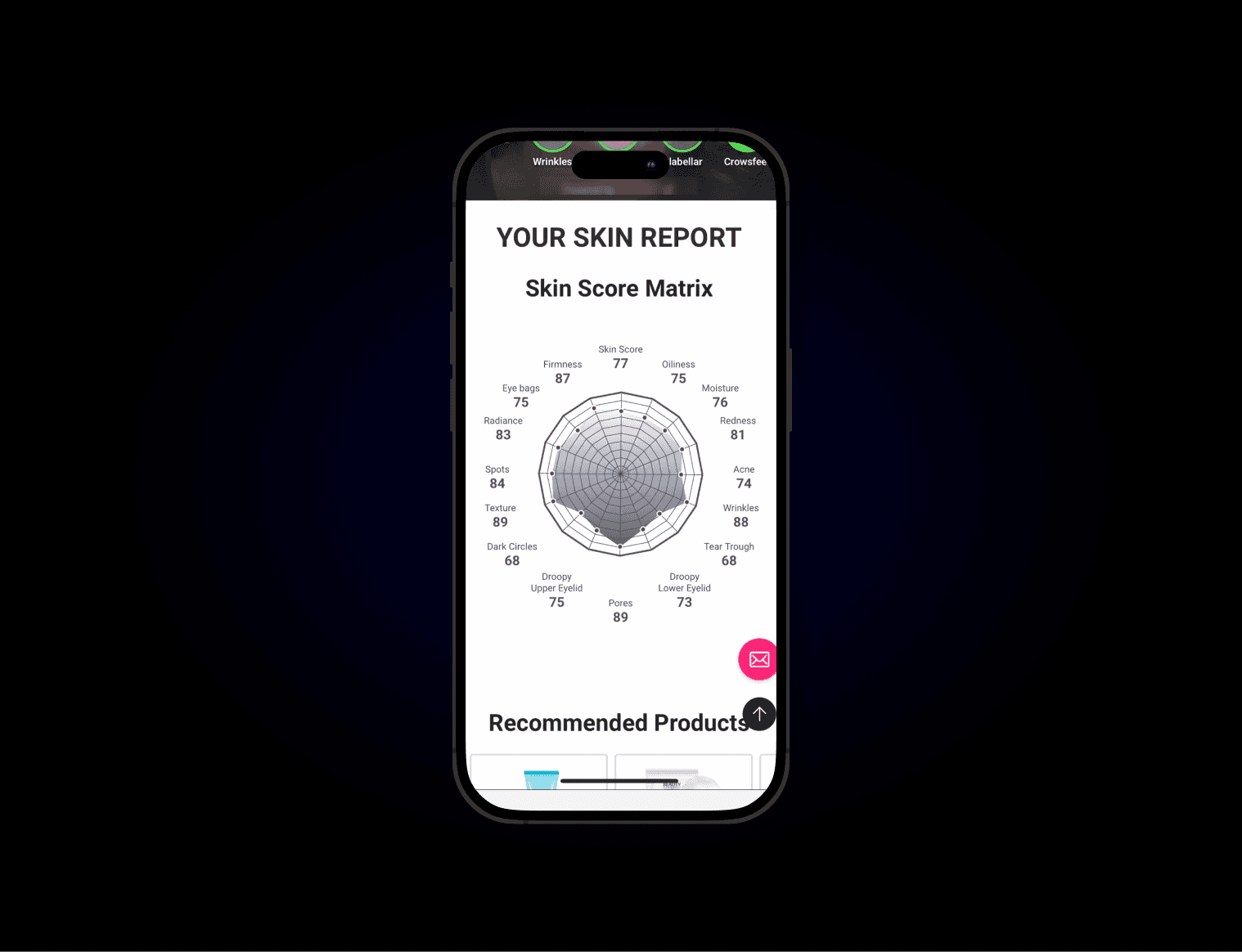
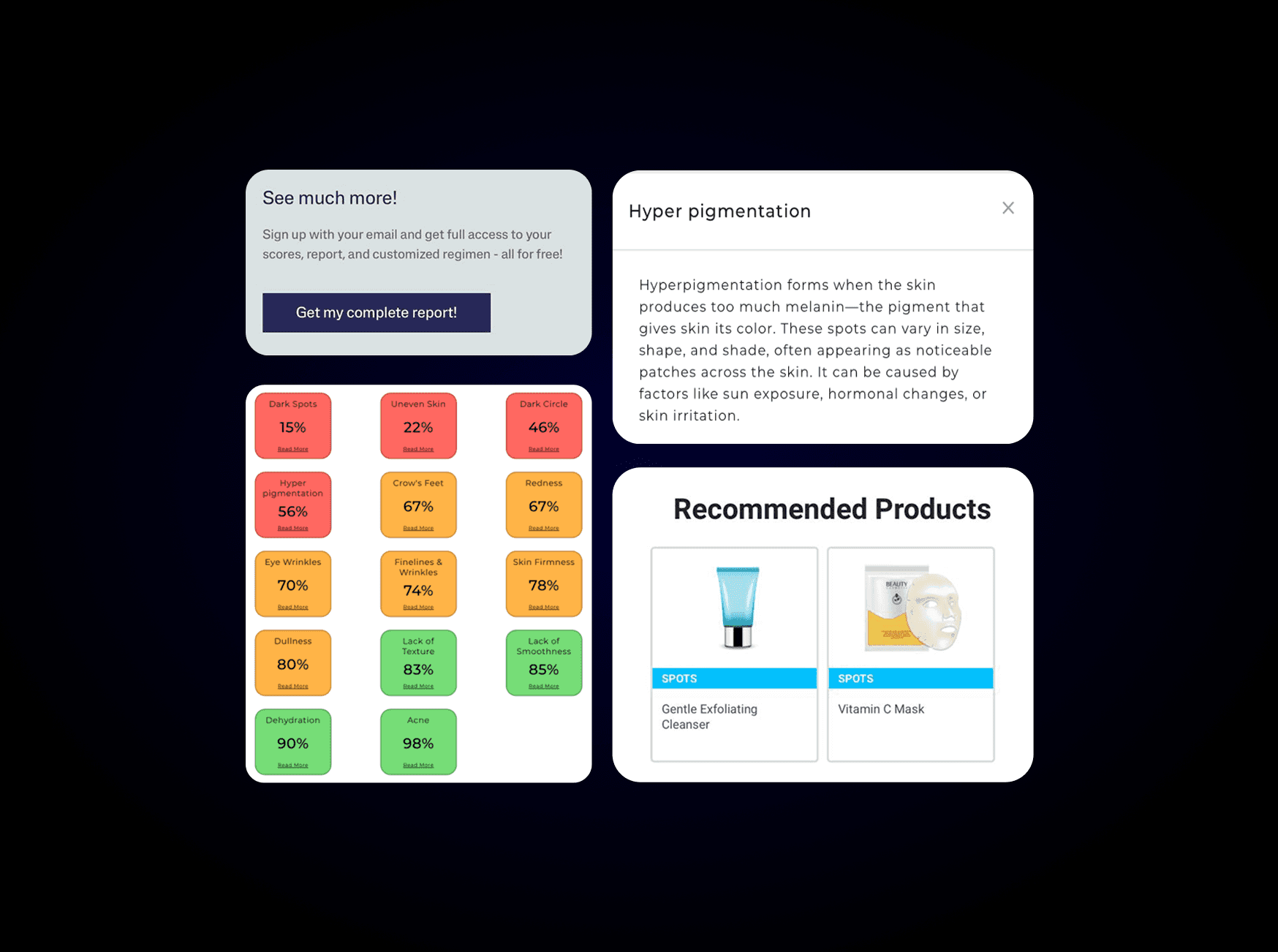
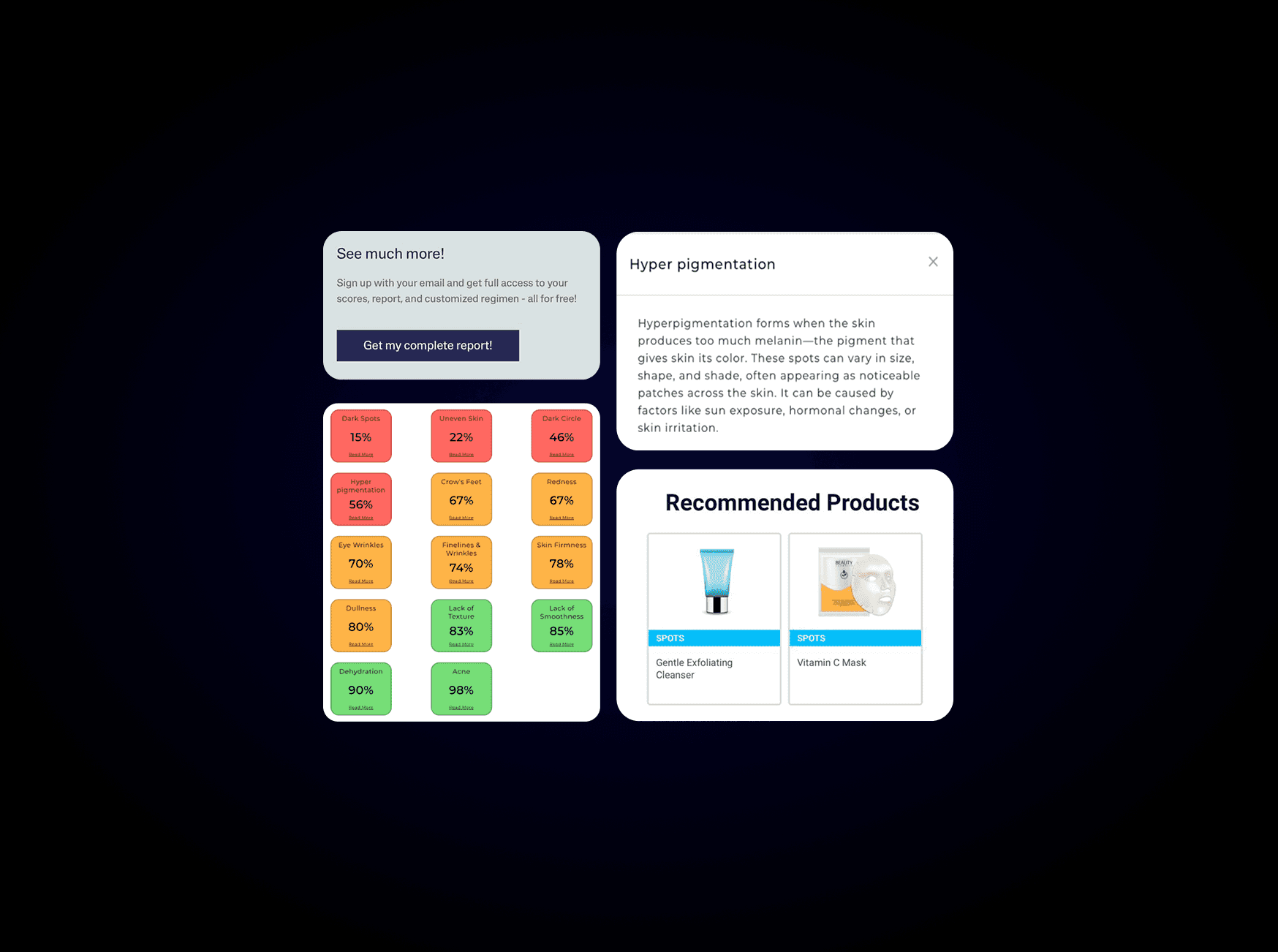
Early POC: The 'Hard Sell' Attempt (Rejected in Initial Pitches)
This initial Proof of Concept (POC) was created to quickly demonstrate the AI's capability. The design bundled the analysis results and product recommendations onto one continuous page with no required personal data collection.
We failed to close deals with this design due to two critical flaws:
Low Trust (Felt like a 'Hard Sell'): The immediate jump from a score to product recommendations lacked objective validation, causing clients and test users to report low confidence in the AI's objectivity.
Missing Personalization: Lacking minimal user data (e.g., perceived age or general skin type), the report felt generic, which prevented the AI from showcasing its genuine capability to provide targeted, meaningful insights.
This failure taught us that for complex AI, the design must prioritize diagnostic transparency and personalization before a commercial transaction.
Research That Drove The Project
To solve this, we stepped back to audit 5 leading competitor apps and conducted interviews with 10 potential users.
These insights helped us define our primary persona, "Nisha" (a skincare skeptic who distrusts marketing hype), and uncovered two fundamental barriers:
Meet Nisha — 27, PR Executive with sensitive skin. She shops online for skincare, watches dozens of review videos, and tries new products often — but still doesn’t know what her skin actually needs.
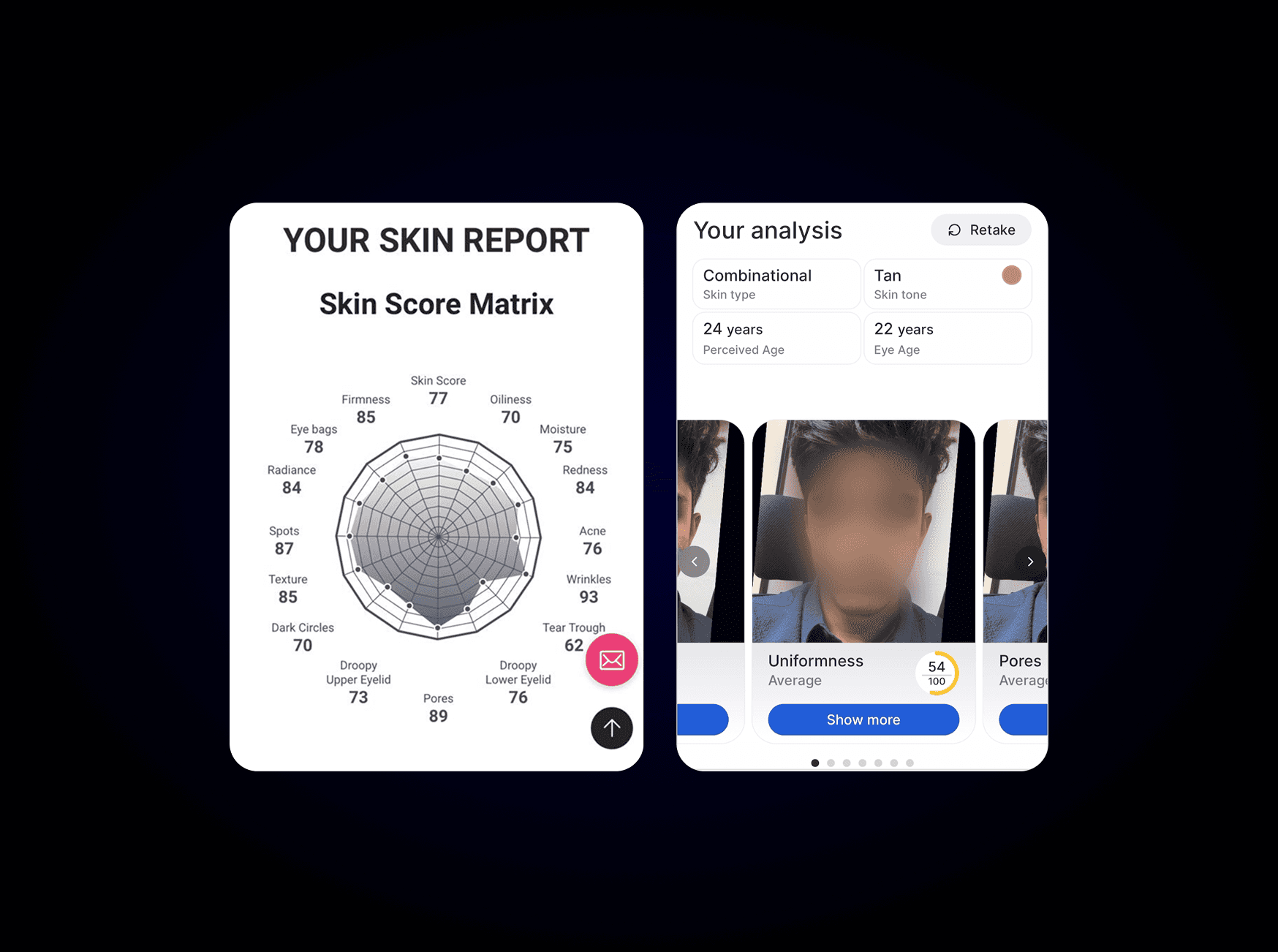
Results from different AI Skin Tests
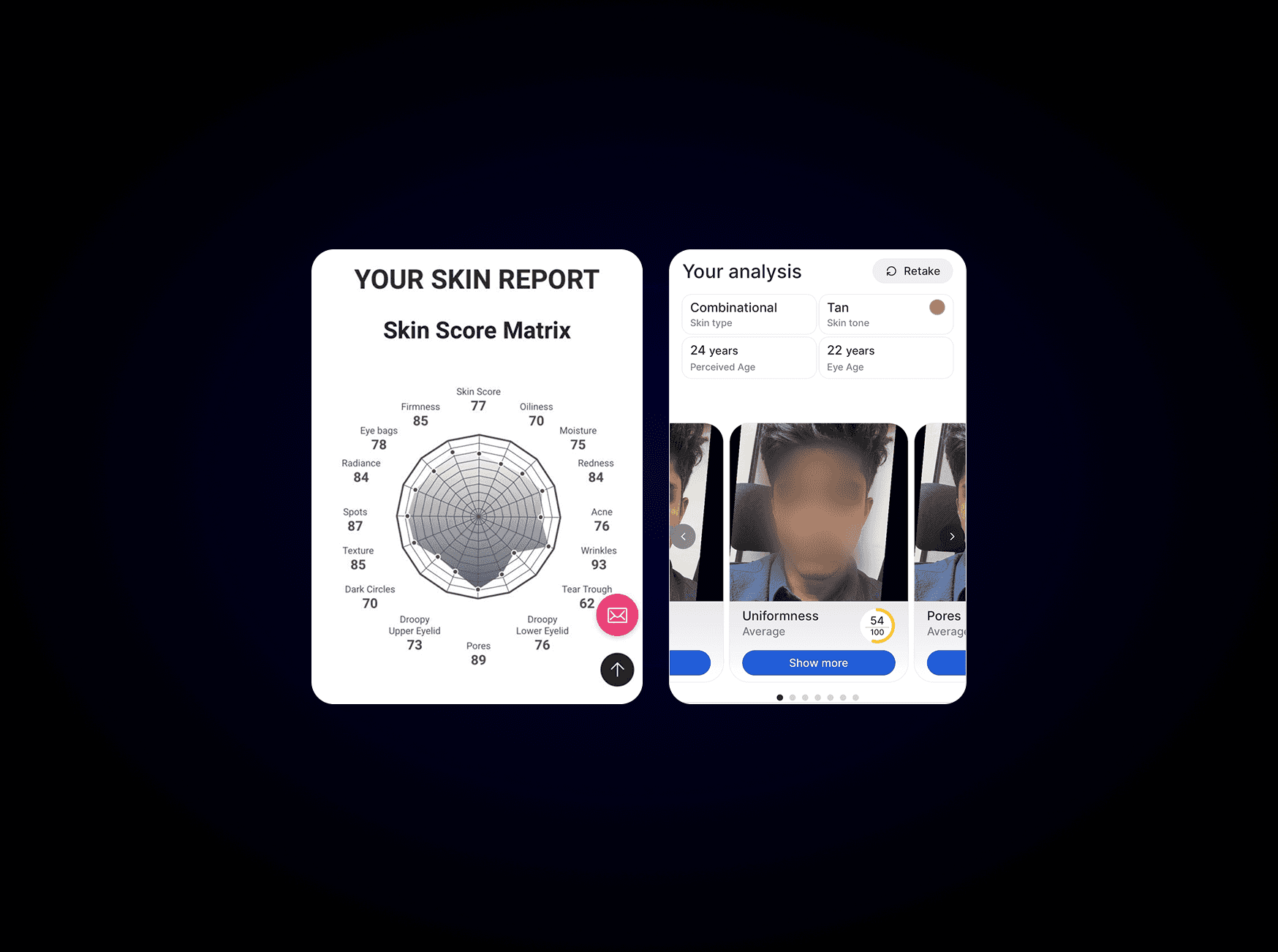
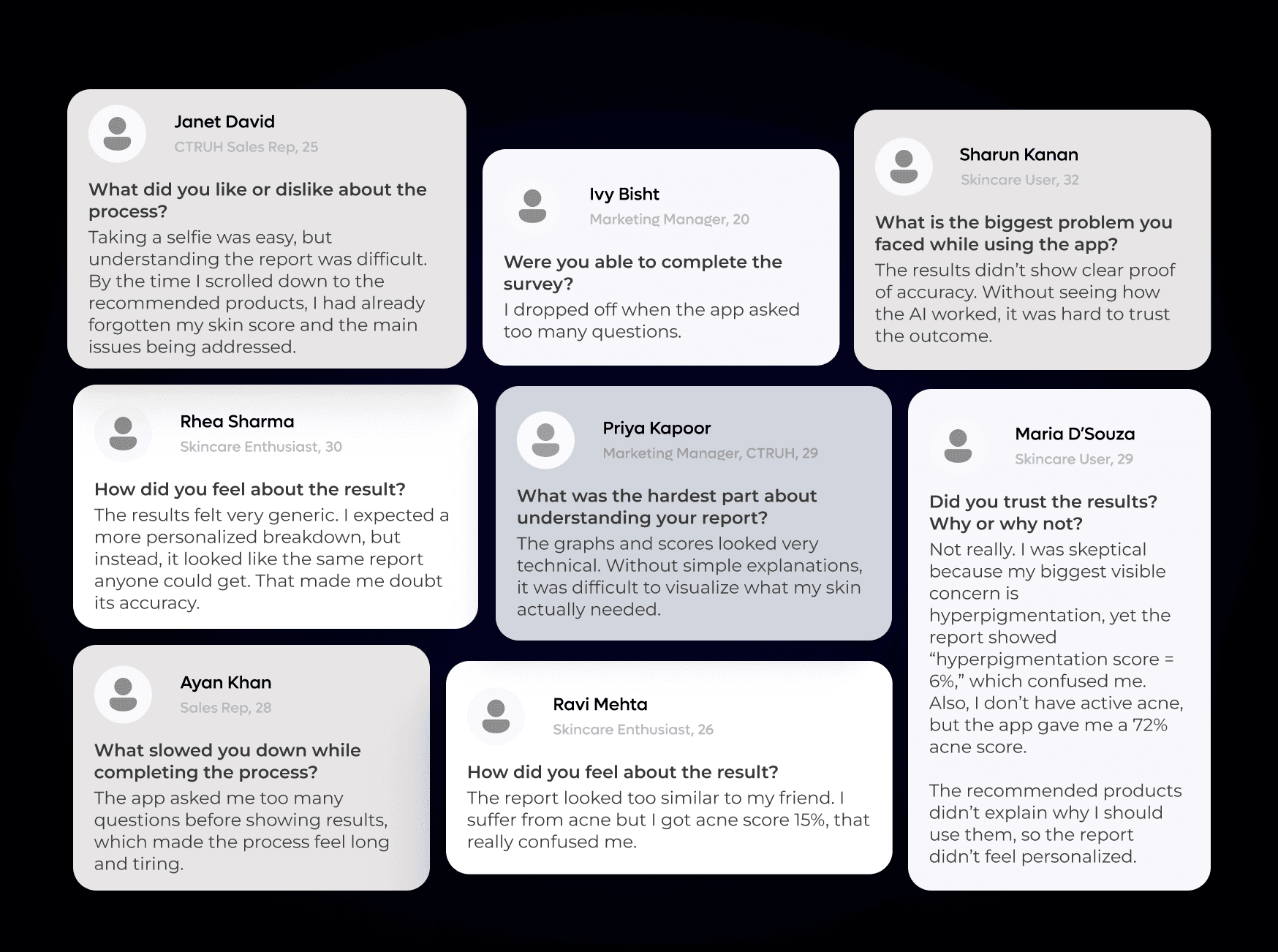
Validation: 3 Key Problems Identified
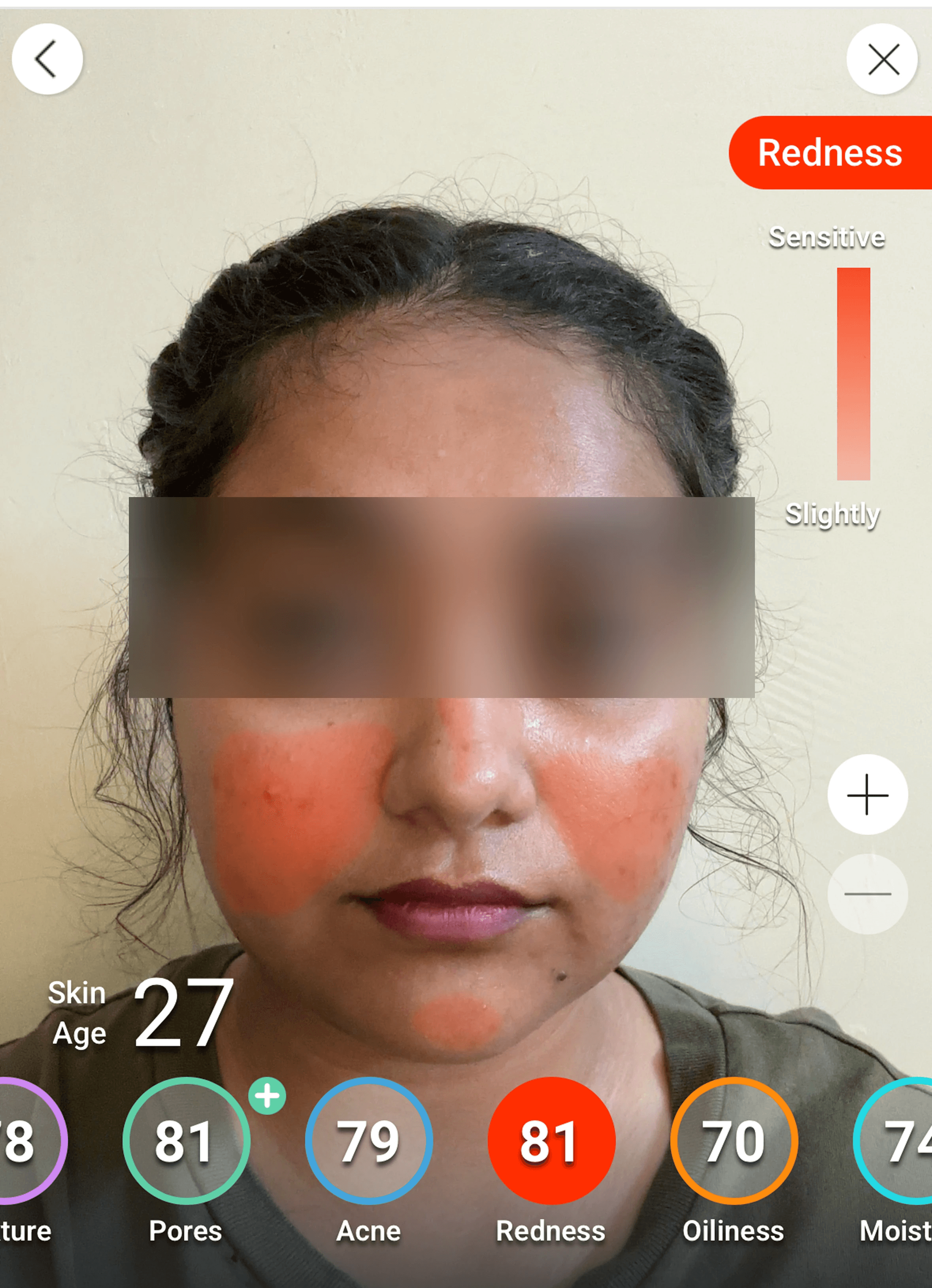
PROBLEM #1
Confusion vs. Clarity
Users struggled to interpret vague percentages (e.g., "83/100") without context.
Confusion slowed down our research — nearly 90% of users needed the scoring explained.
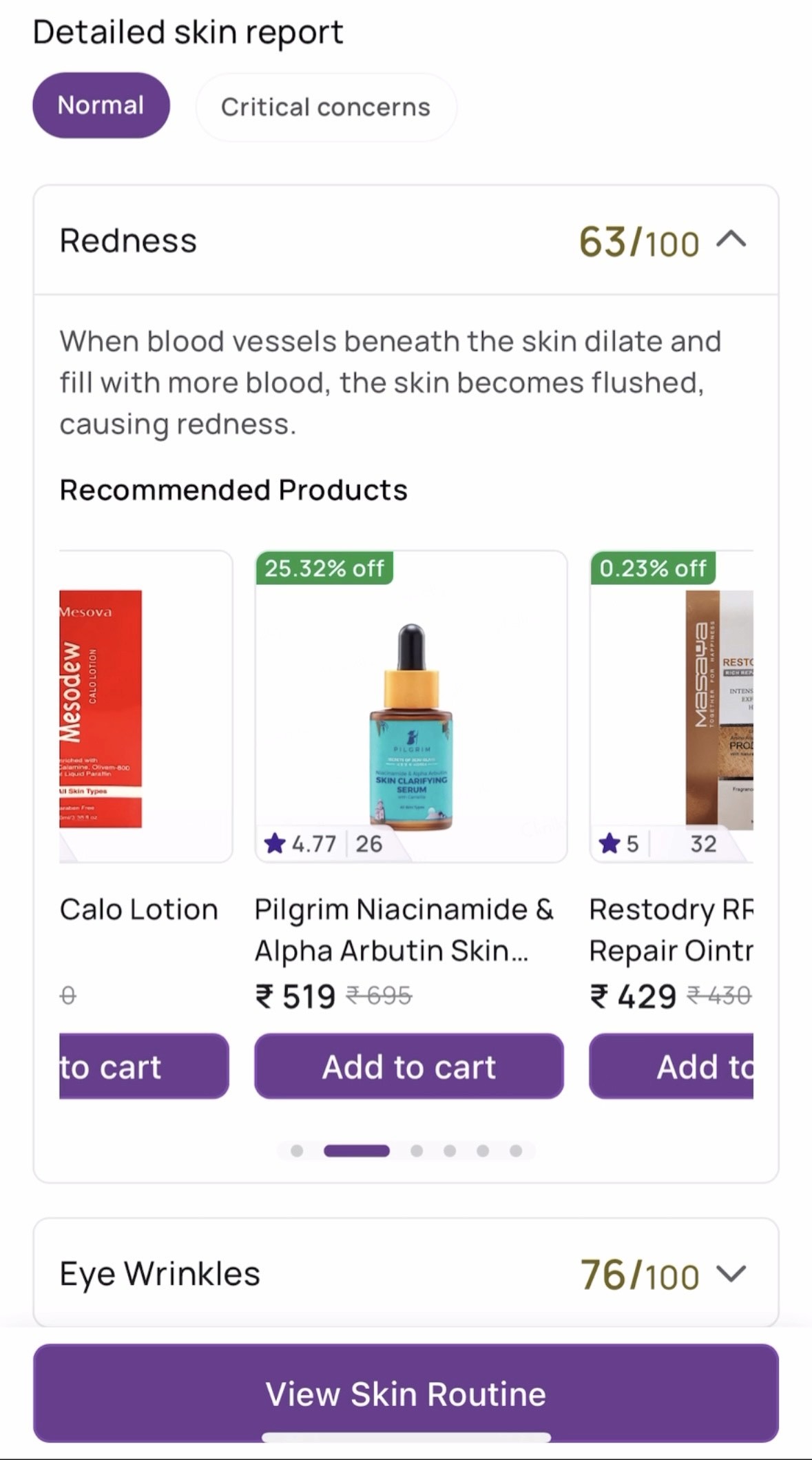
PROBLEM #2
The "Black Box" Effect
Users distrusted scores that appeared without explanation or visible reasoning.
Without transparency, clients hesitated — Over 75% said they would only trust the results if the reasoning was clearly visible.
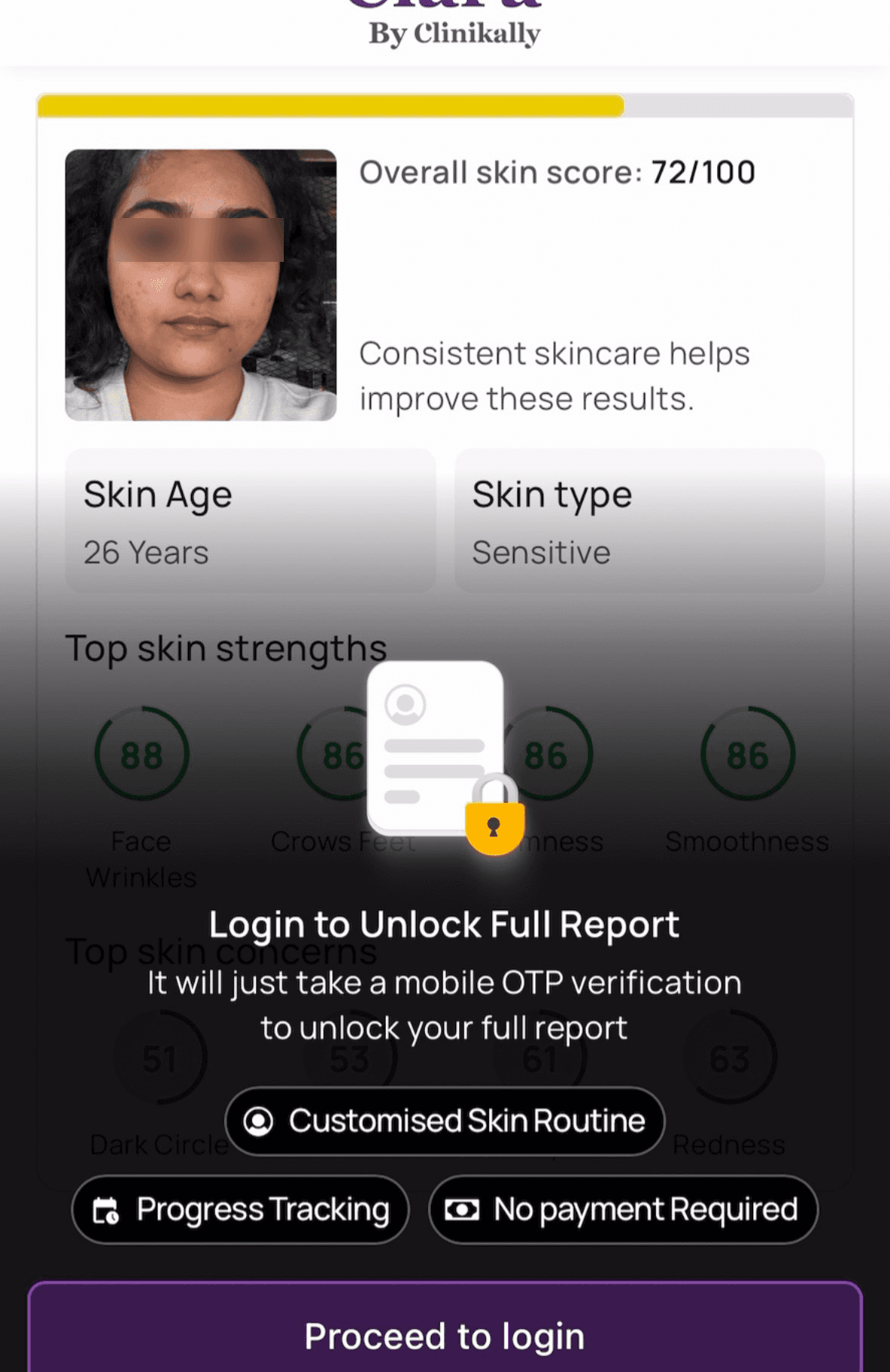
PROBLEM #3
High Friction
Lengthy forms and cluttered data buried the actual value of the AI.
Users reported that over 60% of testing time was spent Filling forms and unlocking reports, instead of highlighting the AI’s capabilities.
Thus, our problem statement became:
How might we present CTRUH’s AI skin analysis in a way that is fast, intuitive, and transparent so clients can instantly understand, trust, and act on the results during demos?
Solutions and Impact We Delivered
I designed the simplest, most scalable solutions after validating our research insights and understanding the technical constraints from our AI team.
SOLUTION #1
Clear, Intuitive Scoring System
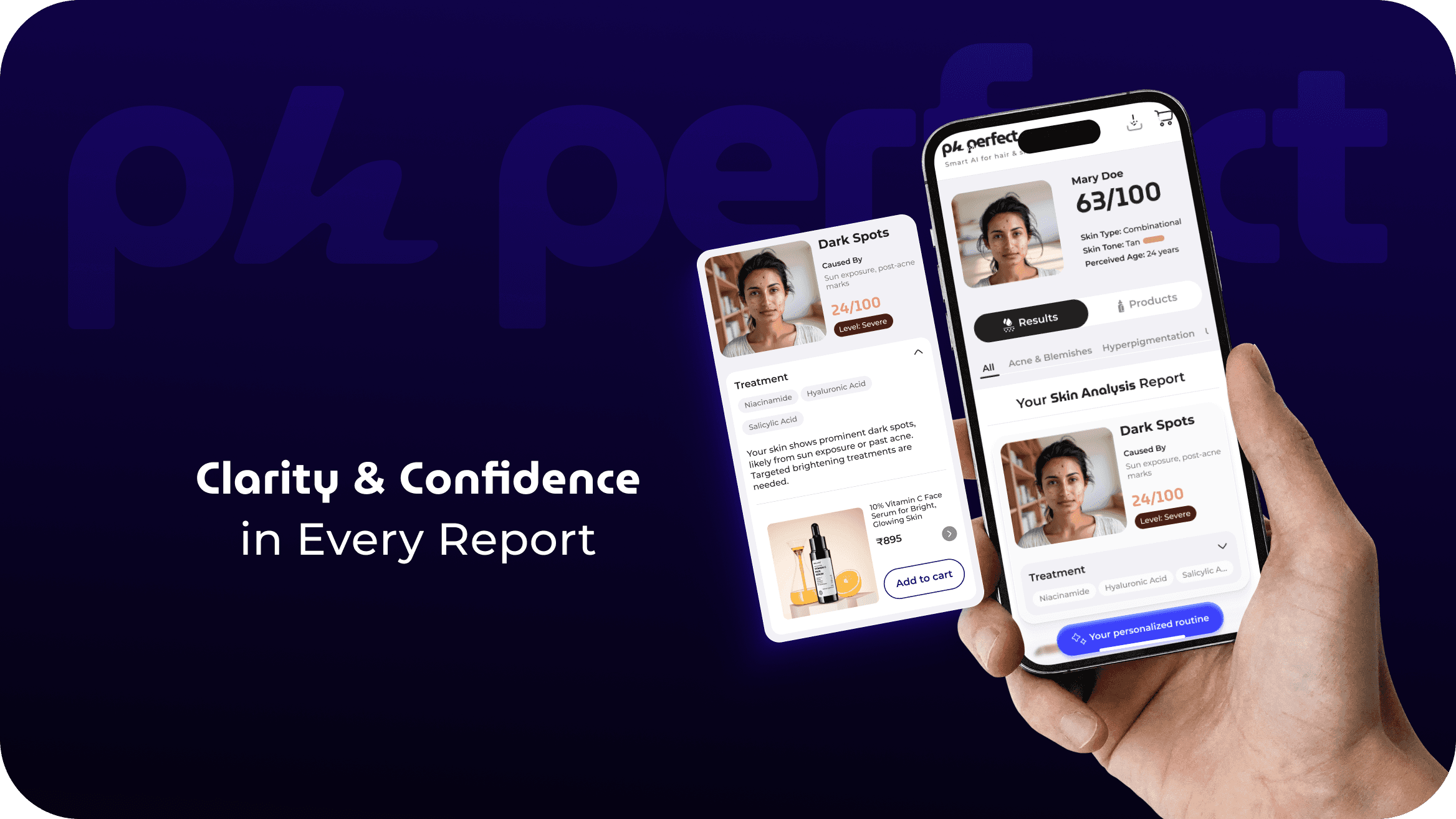
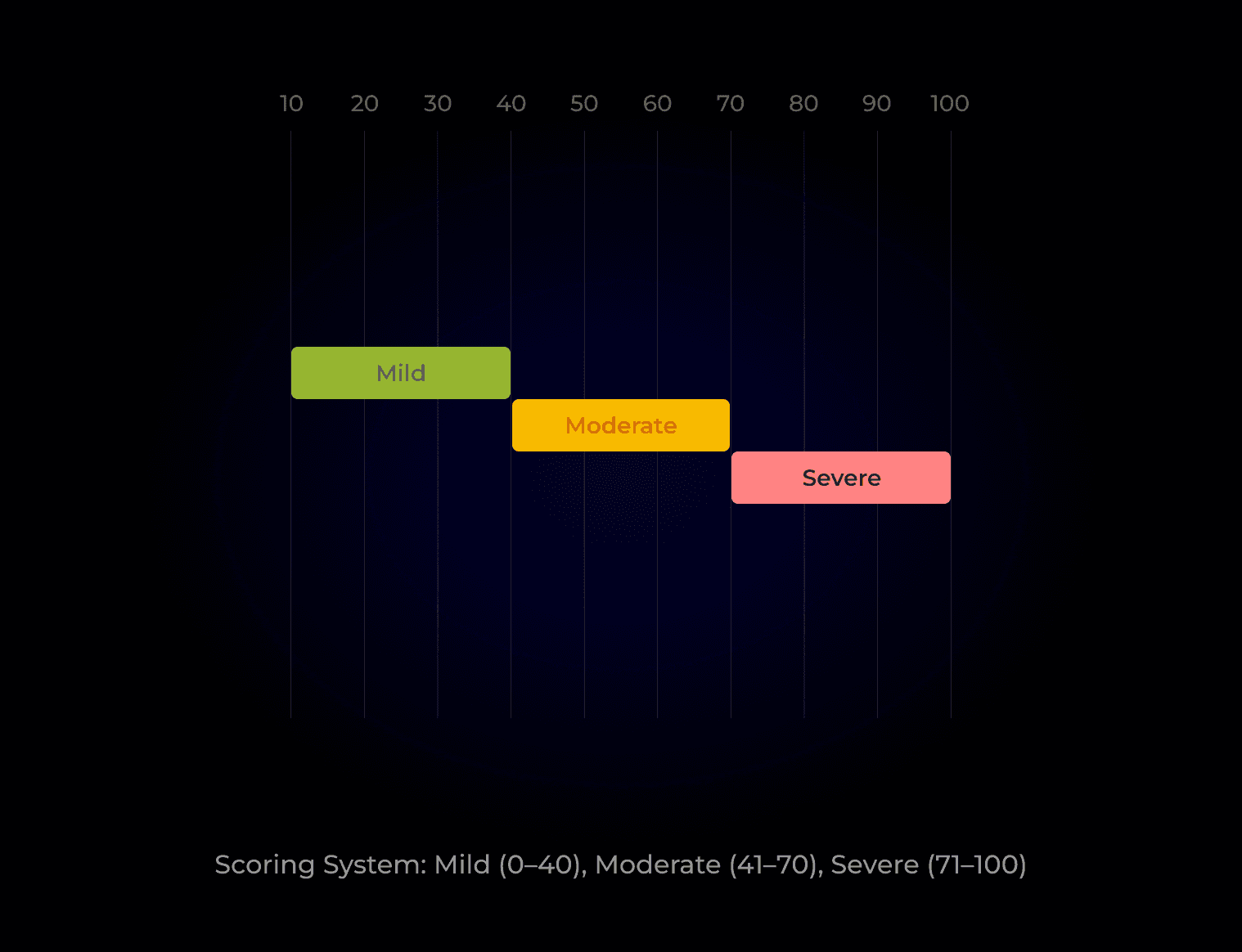
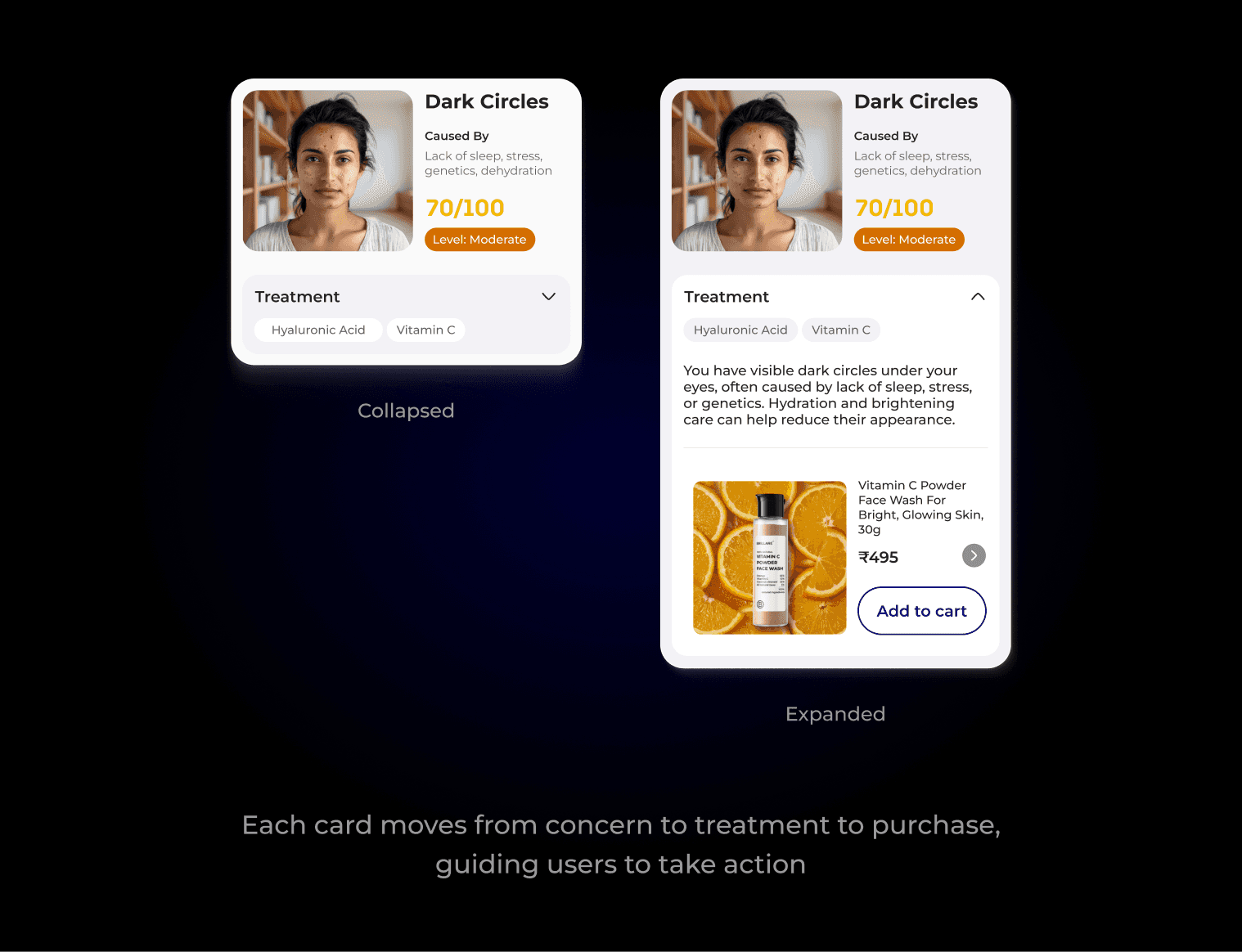
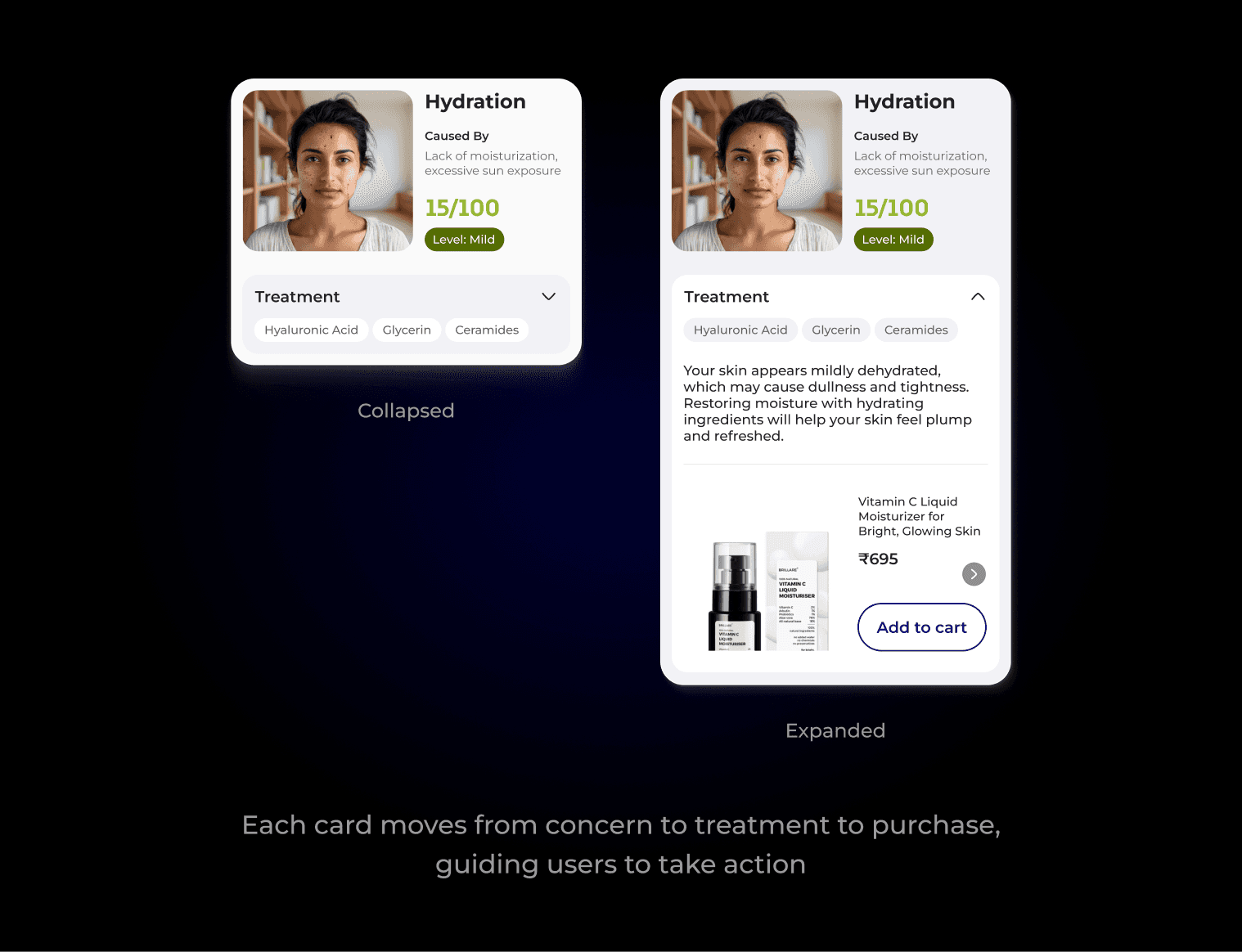
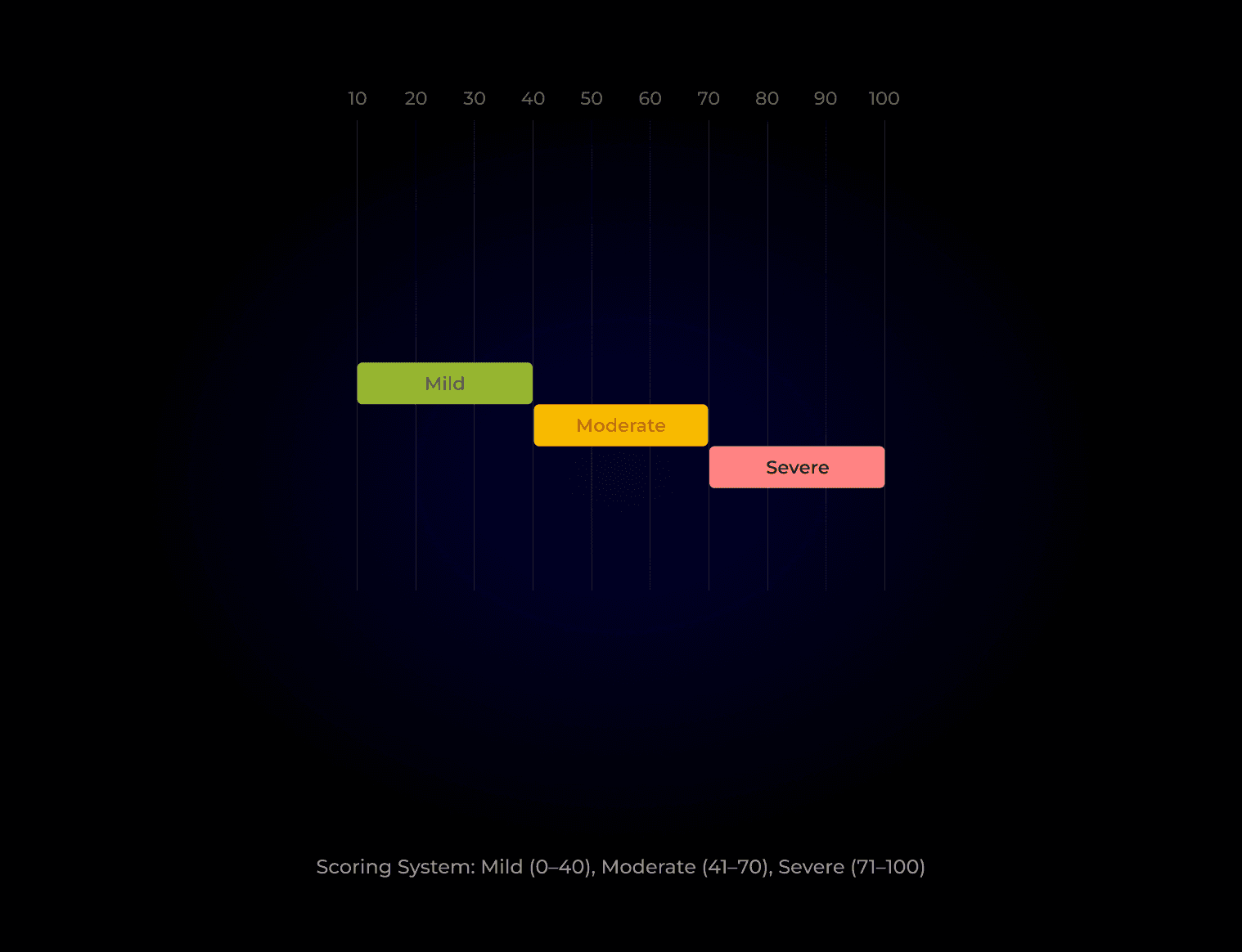
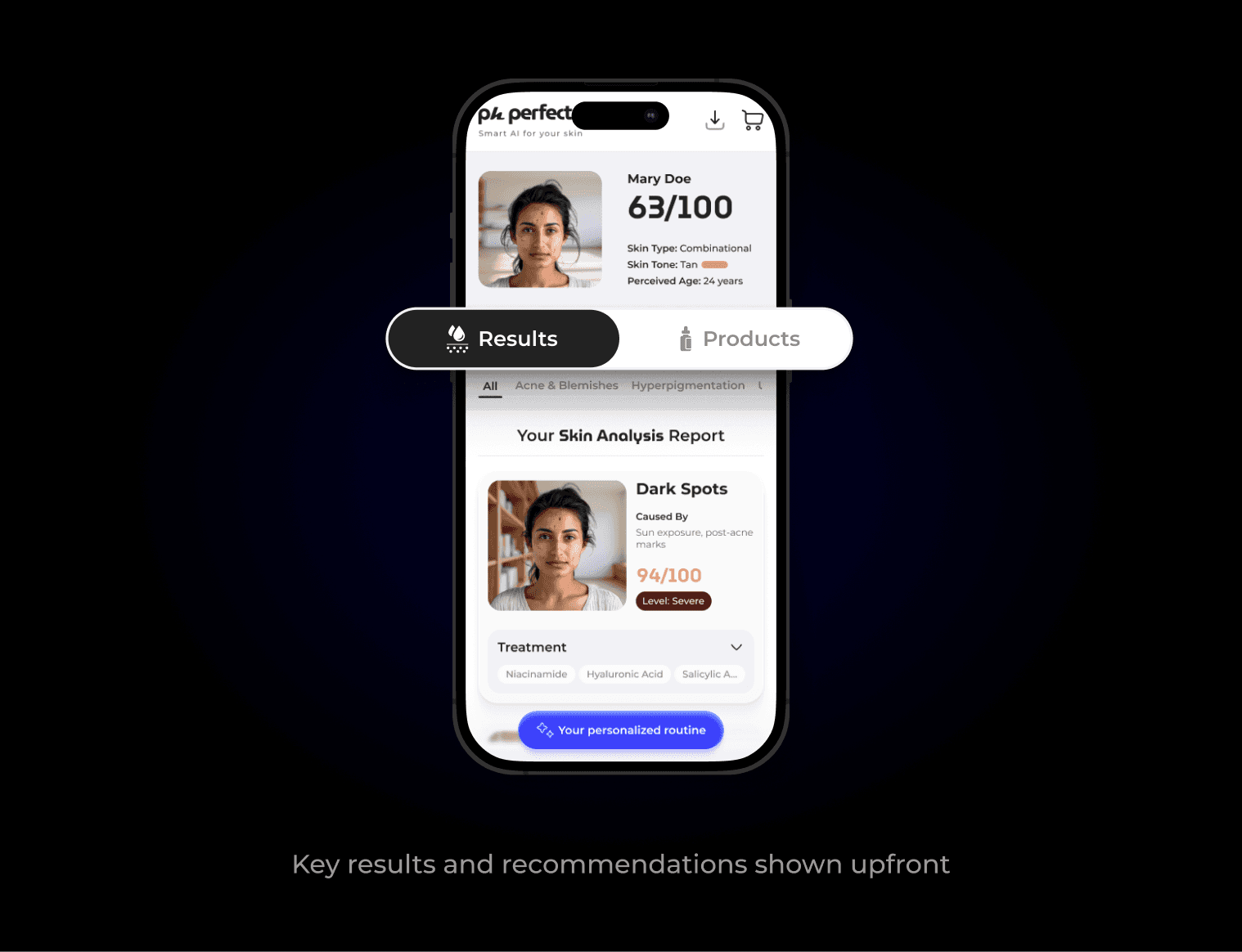
We replaced vague percentages with clear Mild, Moderate, and Severe classifications.
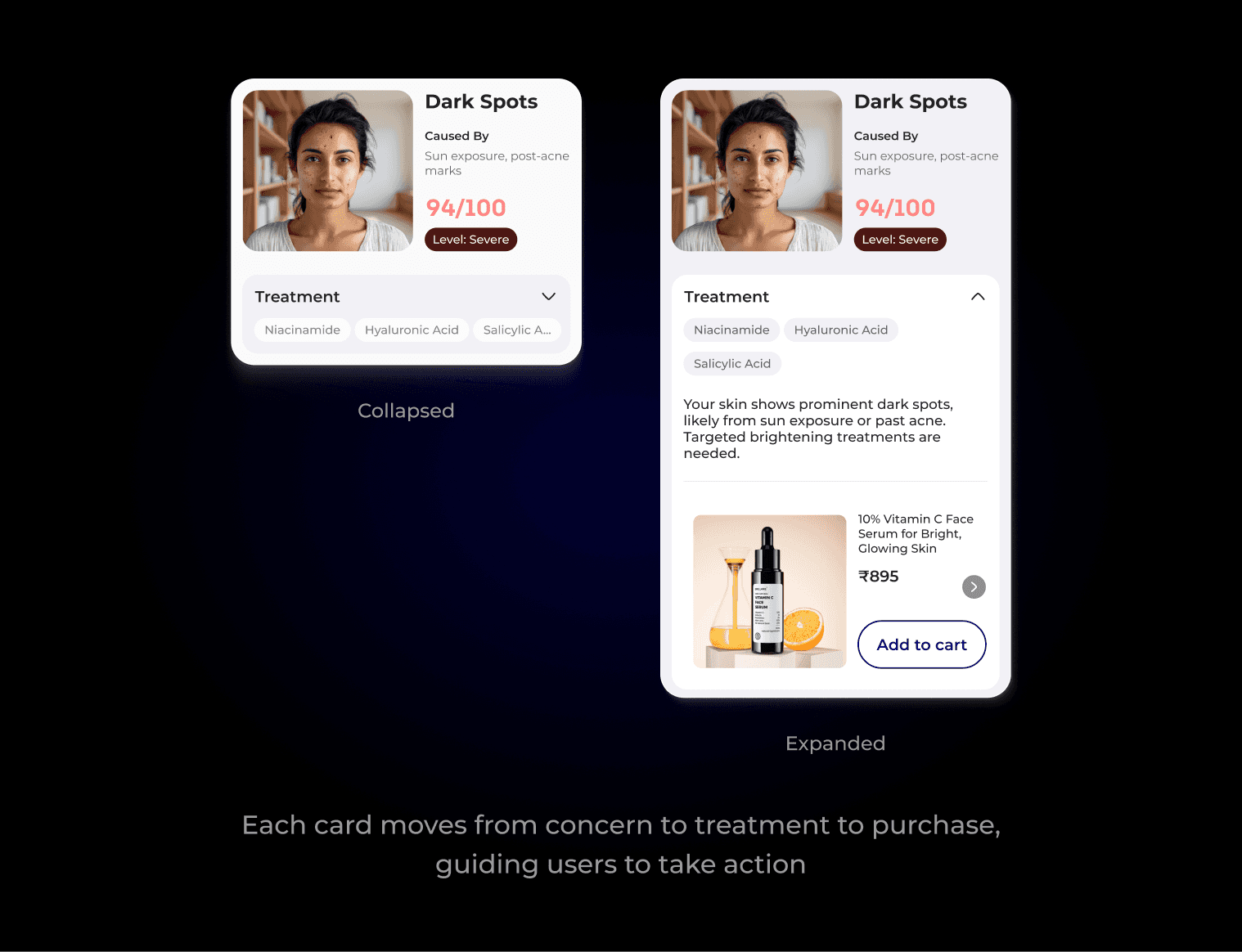
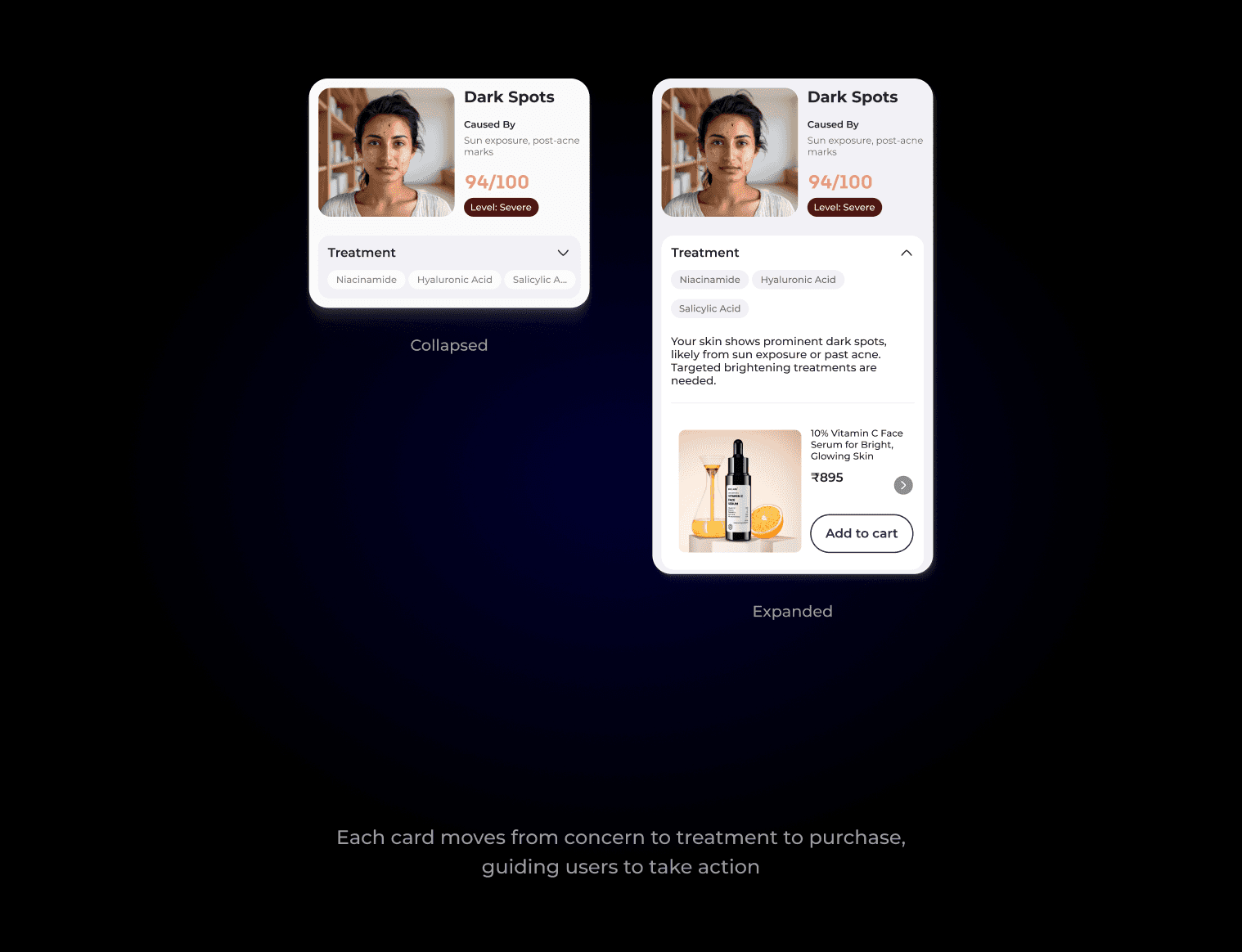
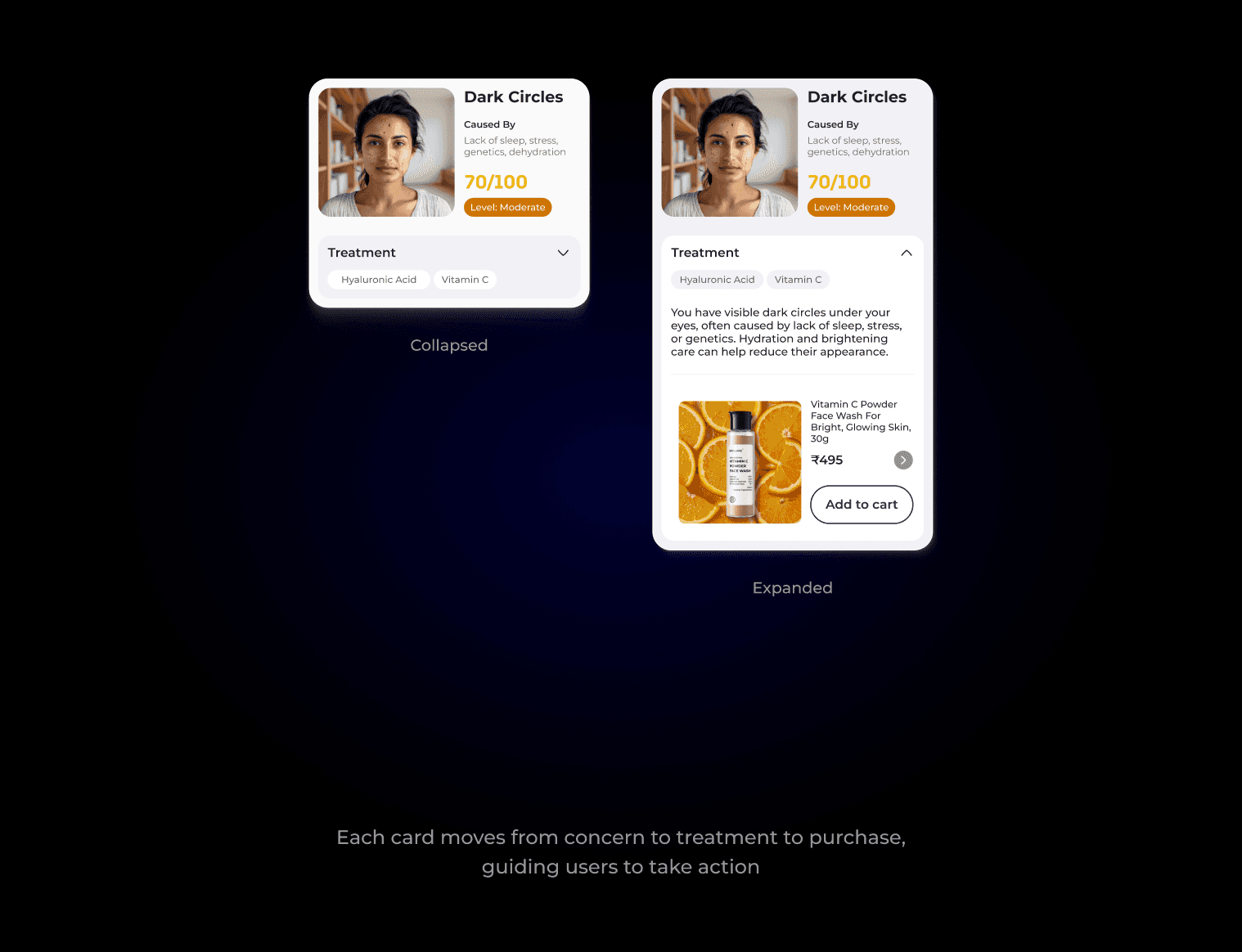
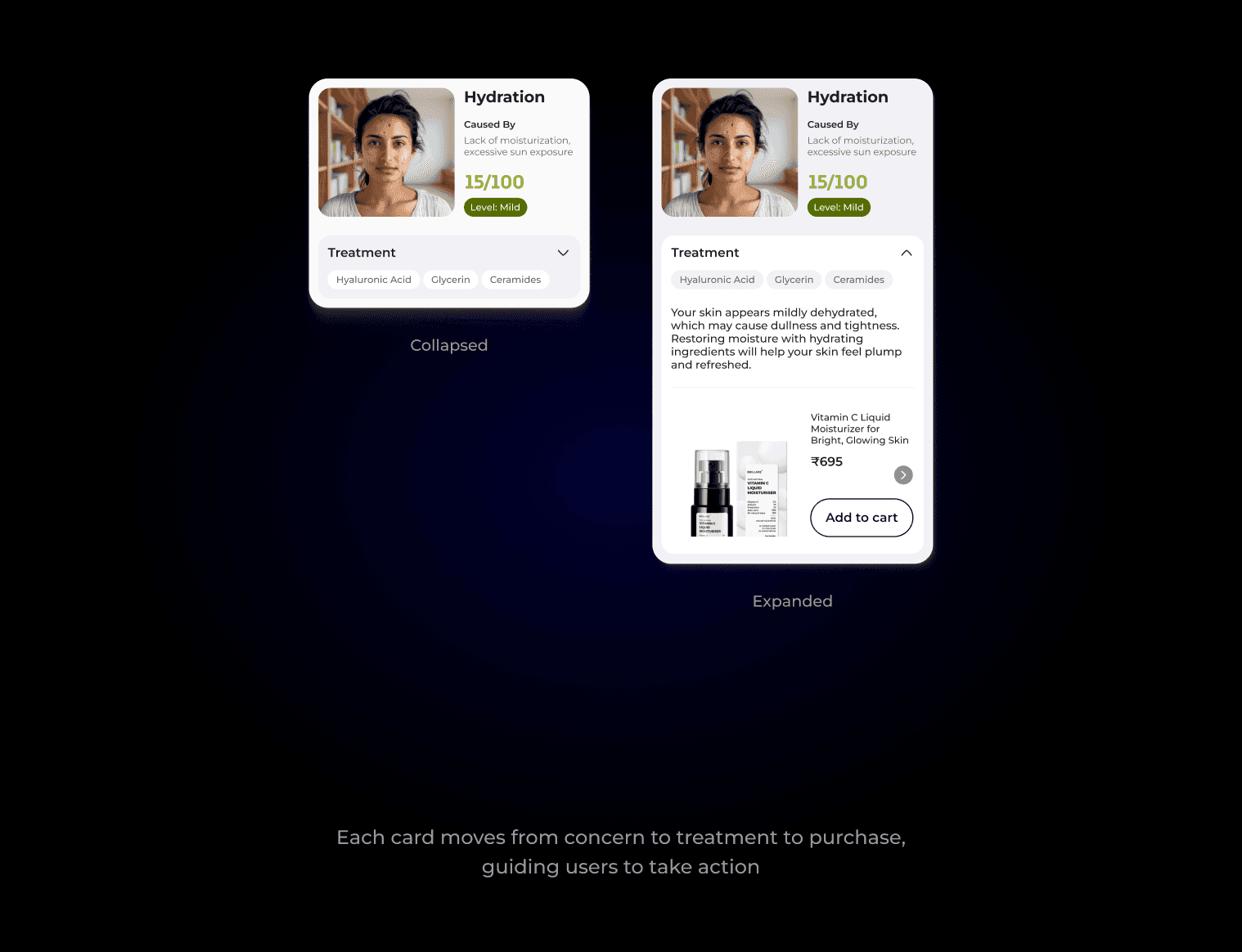
This created a predictable reading pattern Concern → Cause → Treatment that required zero explanation from sales staff.
40%↓
Confusion reduced, leading to faster and clearer pitches
SOLUTION #2
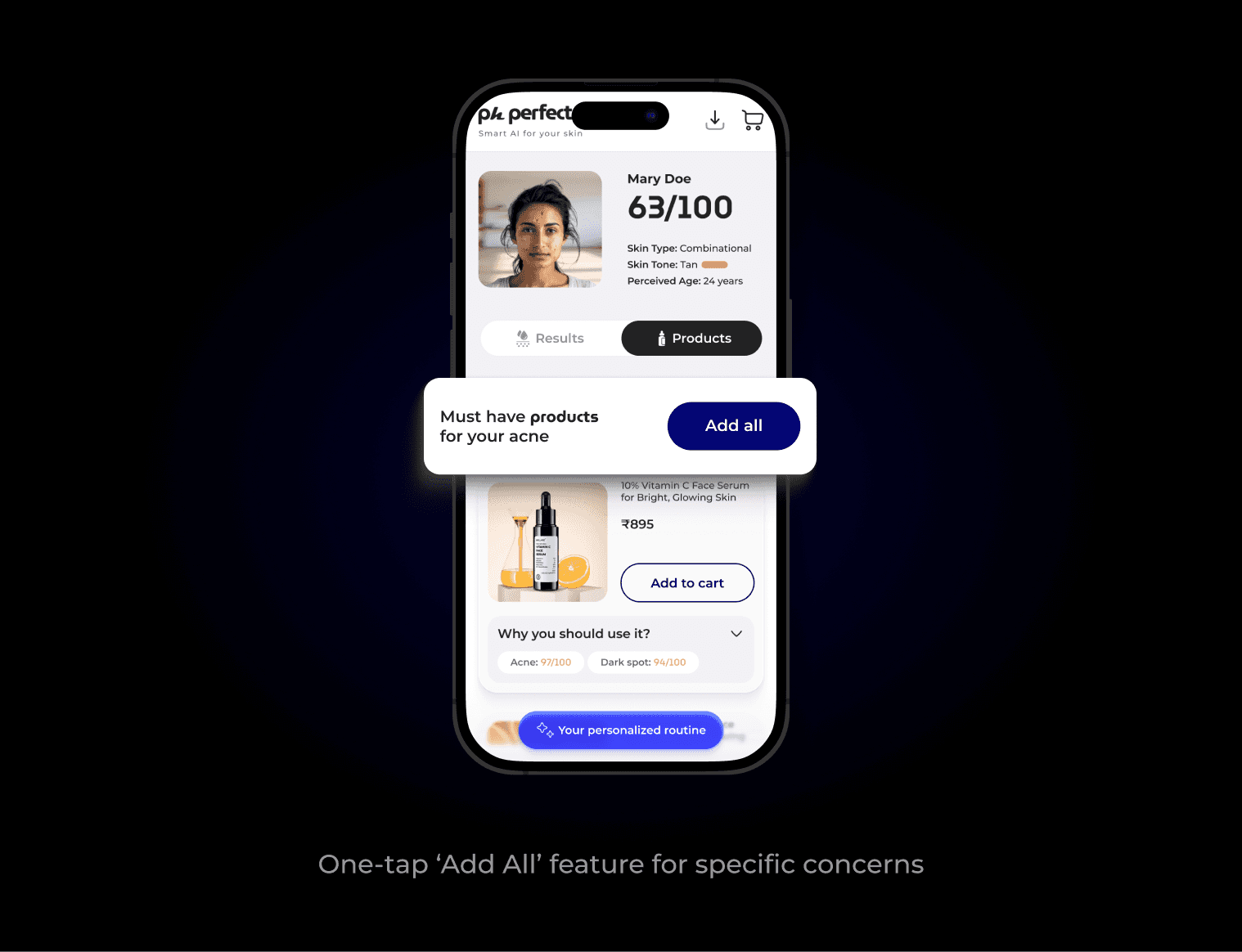
Personalized, Actionable Reports
To build trust, we made the AI's reasoning visible.
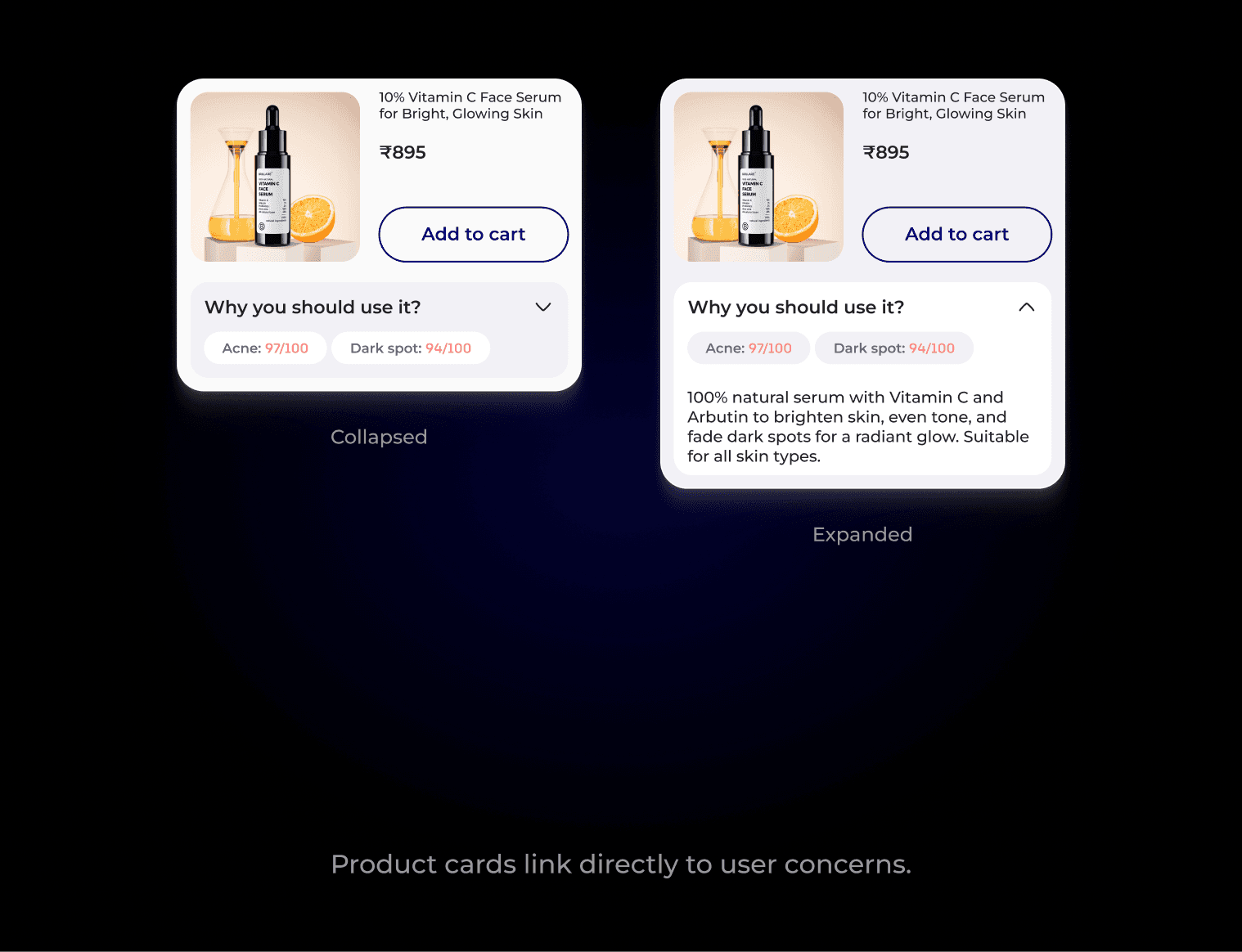
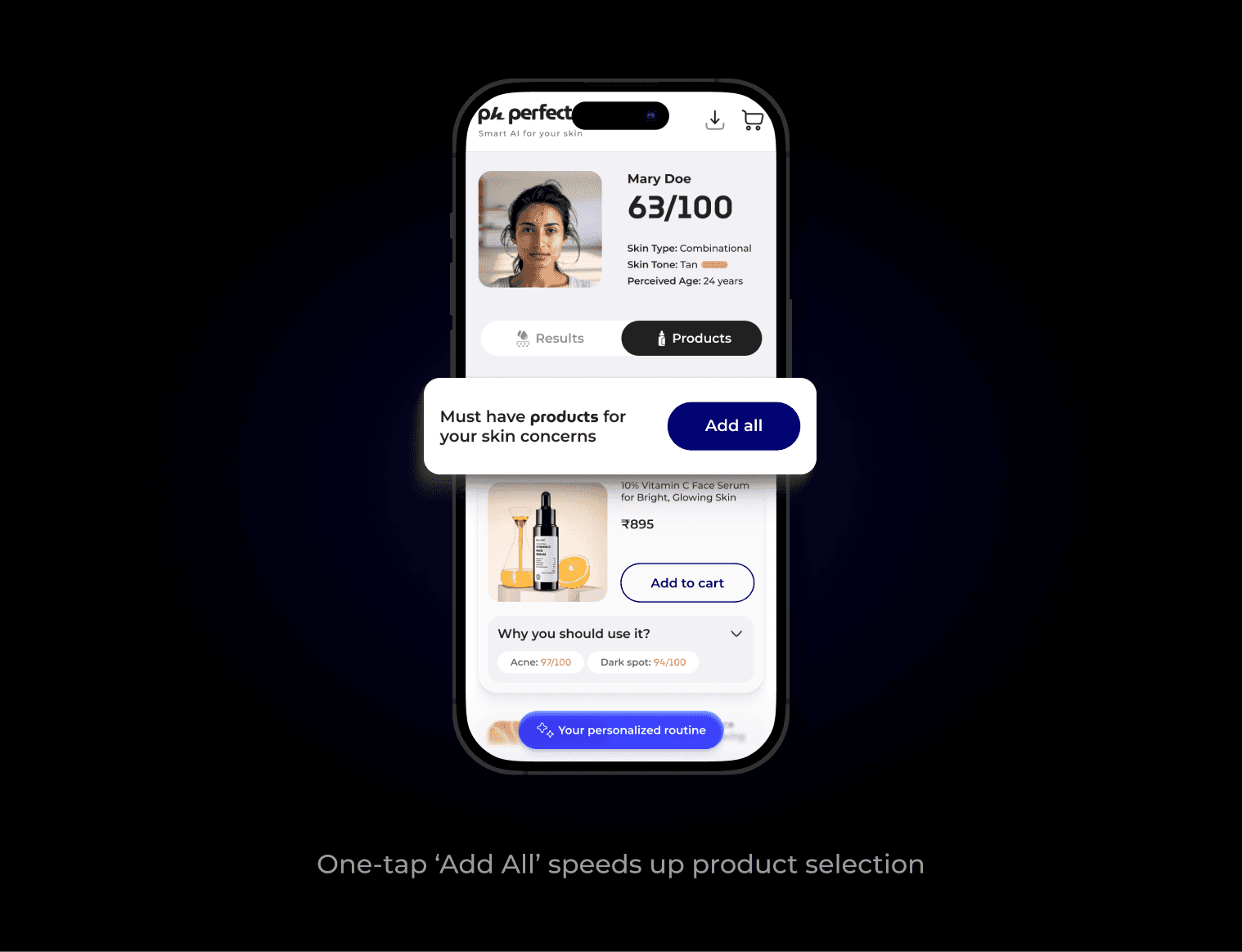
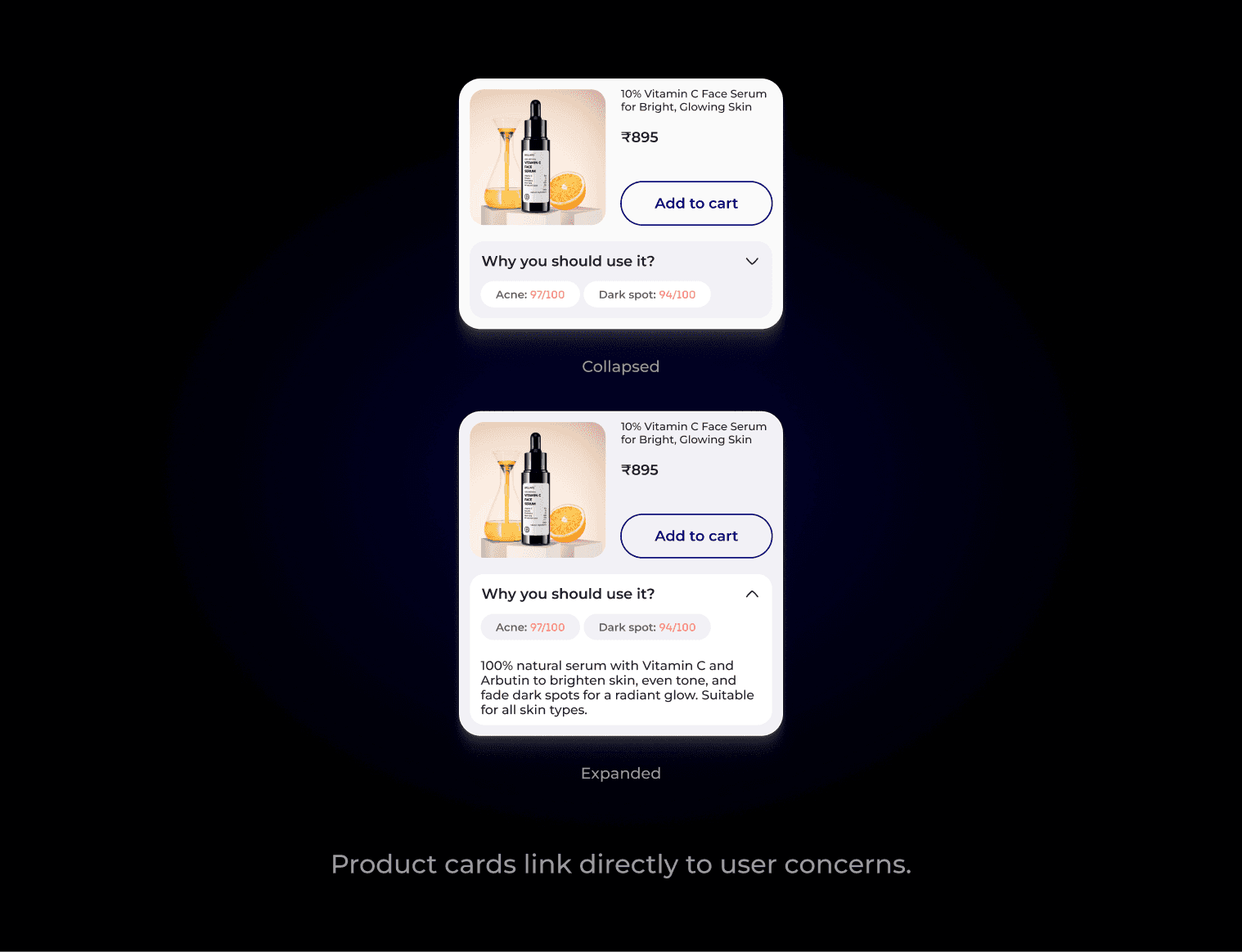
Instead of a raw score, every diagnosis now follows a strict hierarchy: Explain the Concern → Identify the Cause → Recommend the Treatment. This explicitly answers the client's question: "Why should I trust this?
Key improvements included:
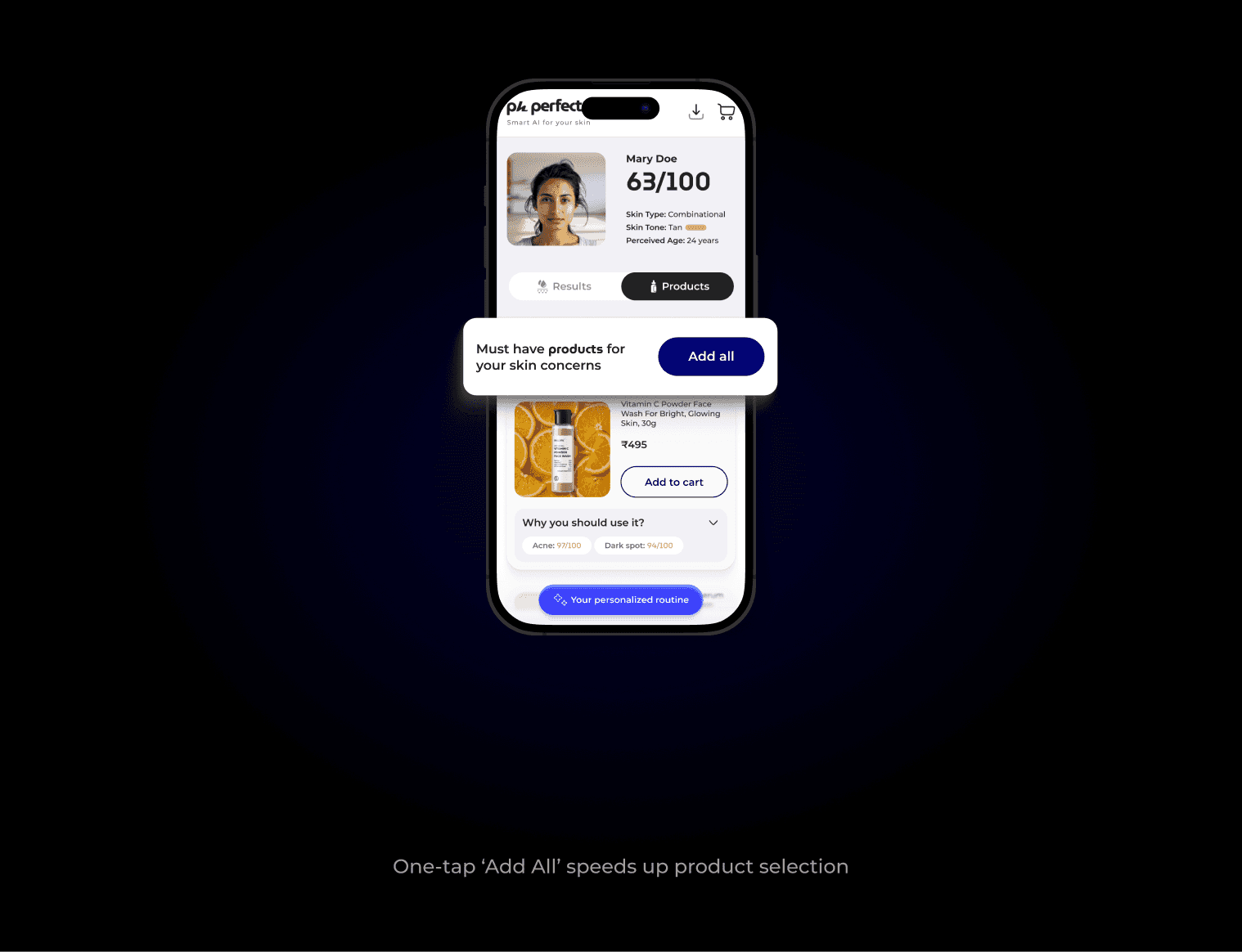
Scores tied to specific conditions (e.g., Acne 94/100)
Clear reasoning (“Caused by sun exposure / post-acne marks”)
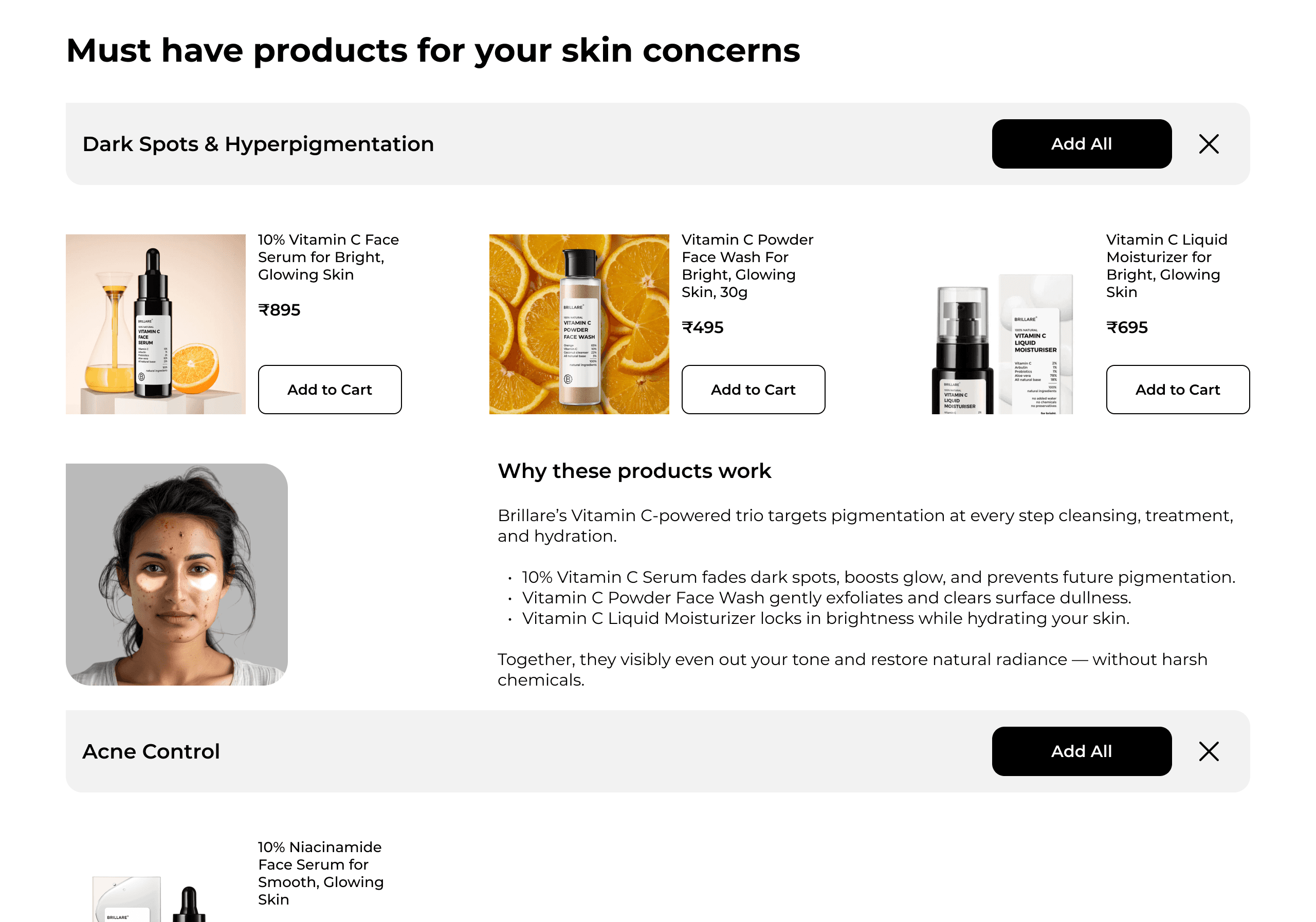
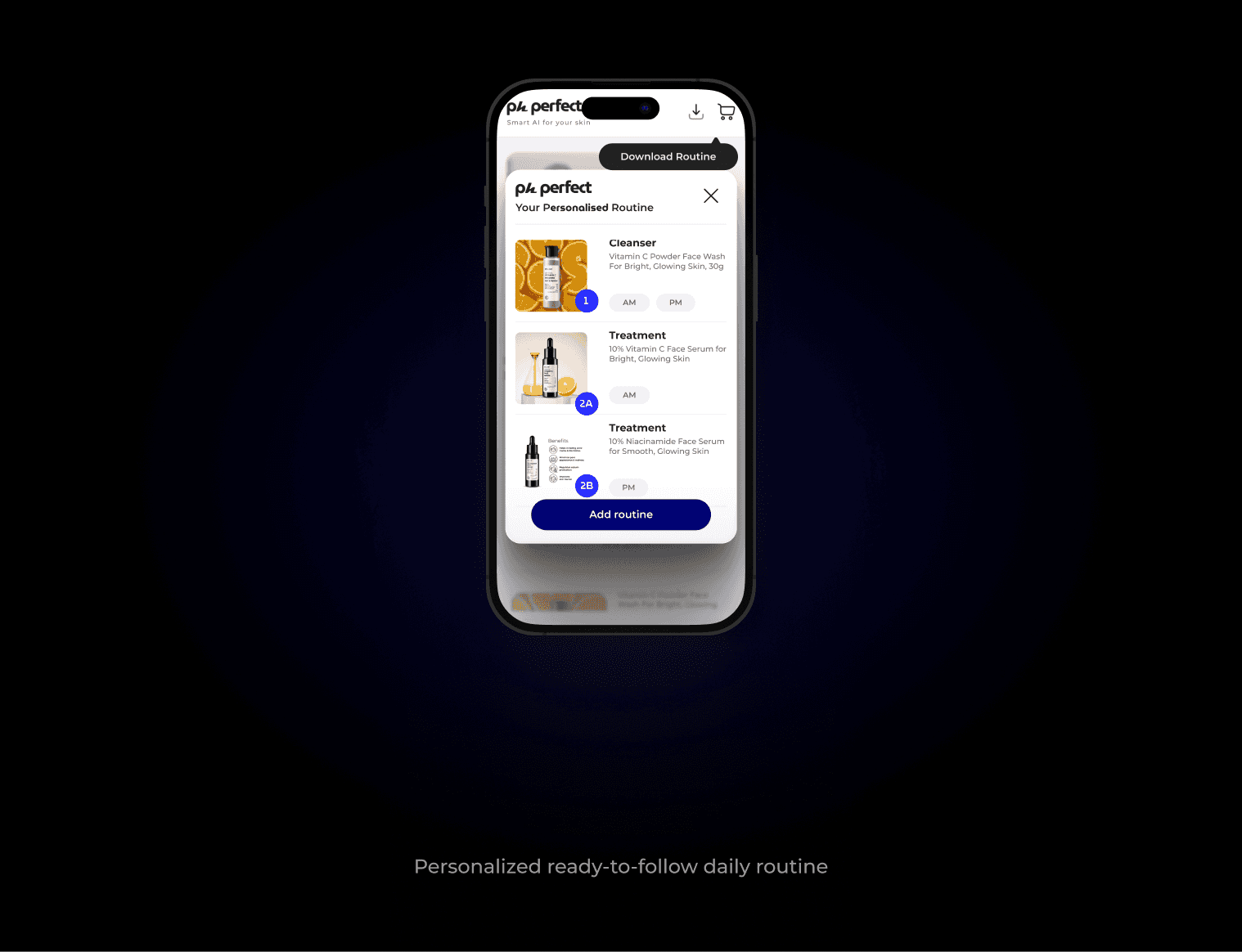
One-tap Add All for essential products
3 Brand Deals
Helped close 3 new brand conversations in the first month
SOLUTION #3
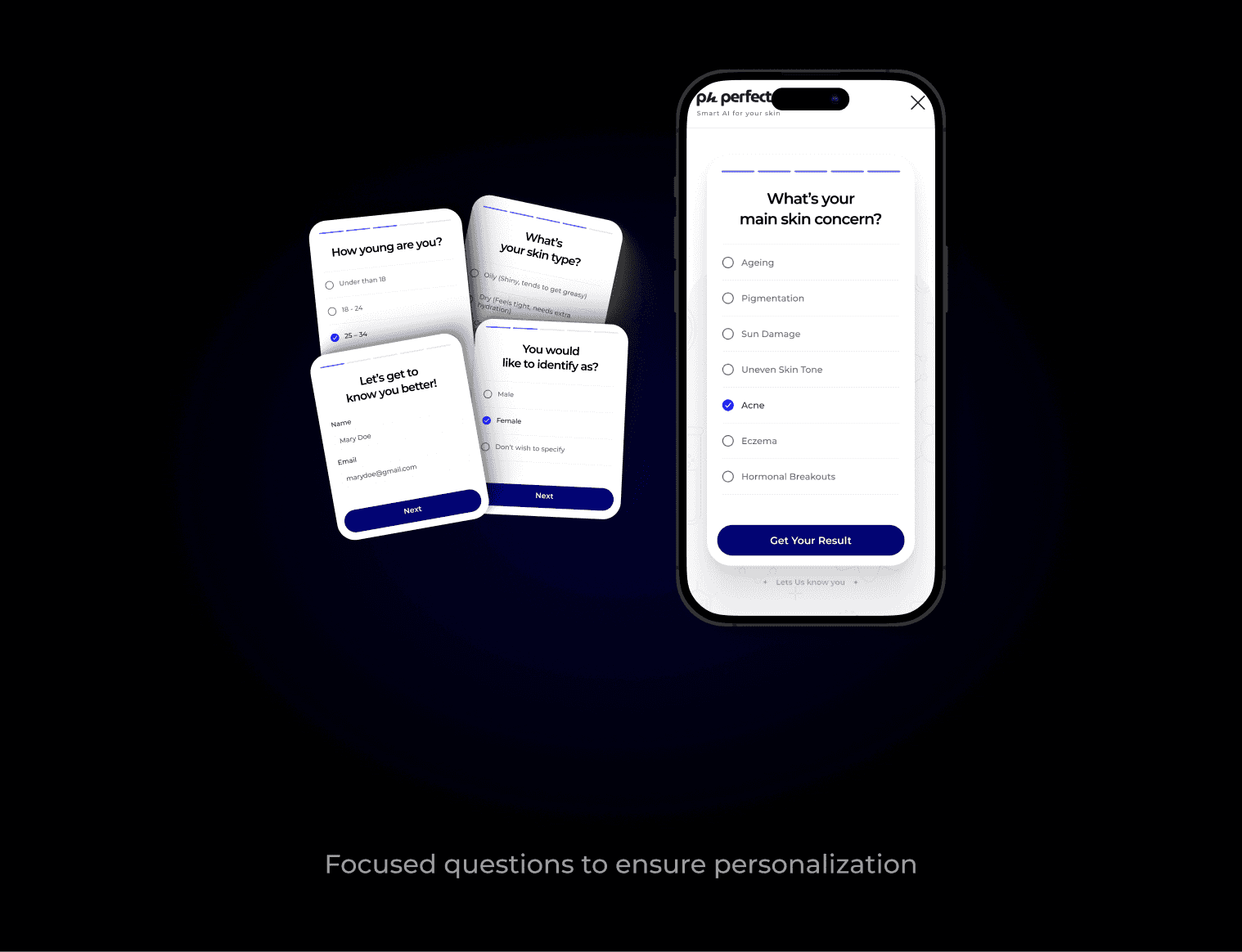
A Seamless, Under-a-Minute Flow
We cut the friction to ensure speed.
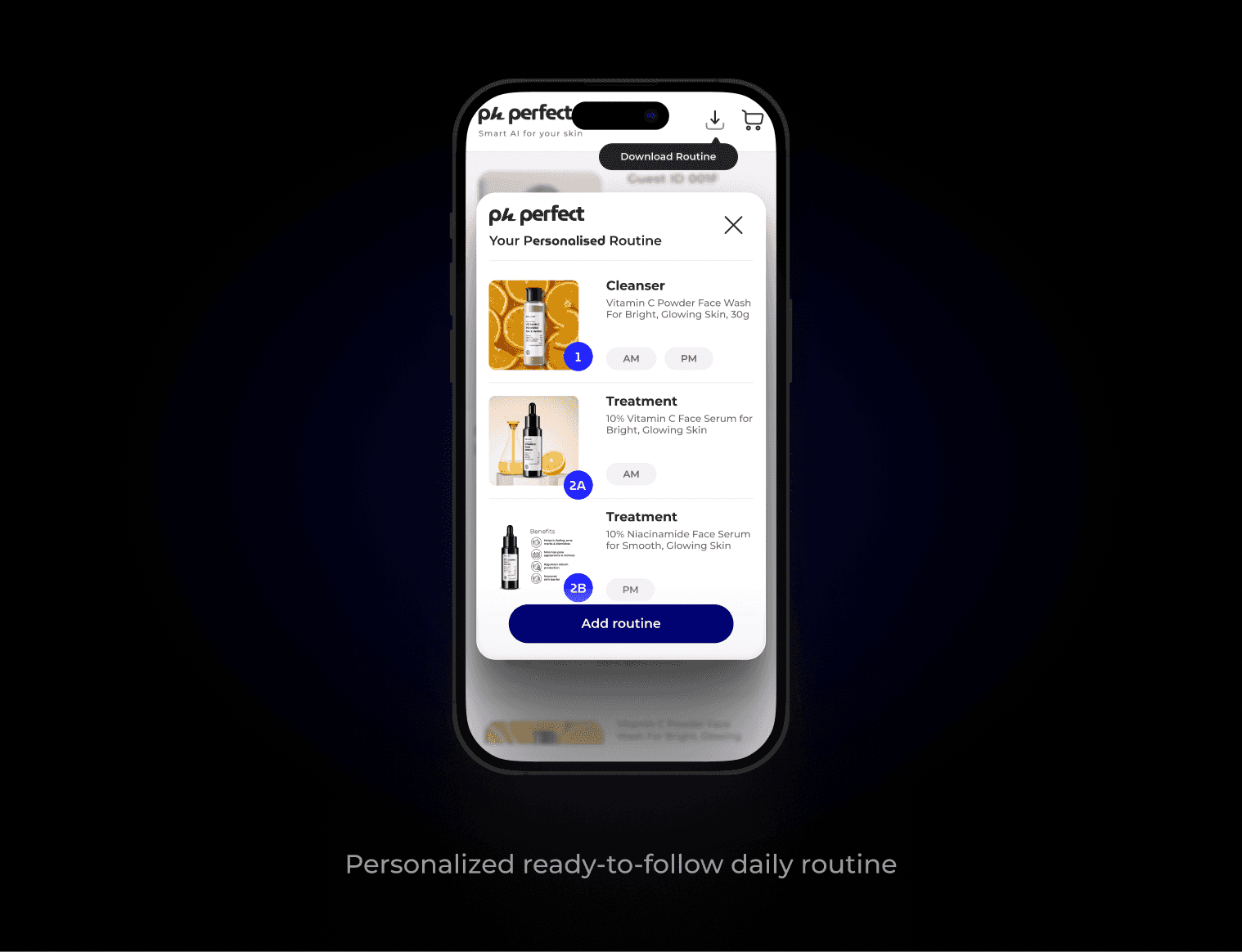
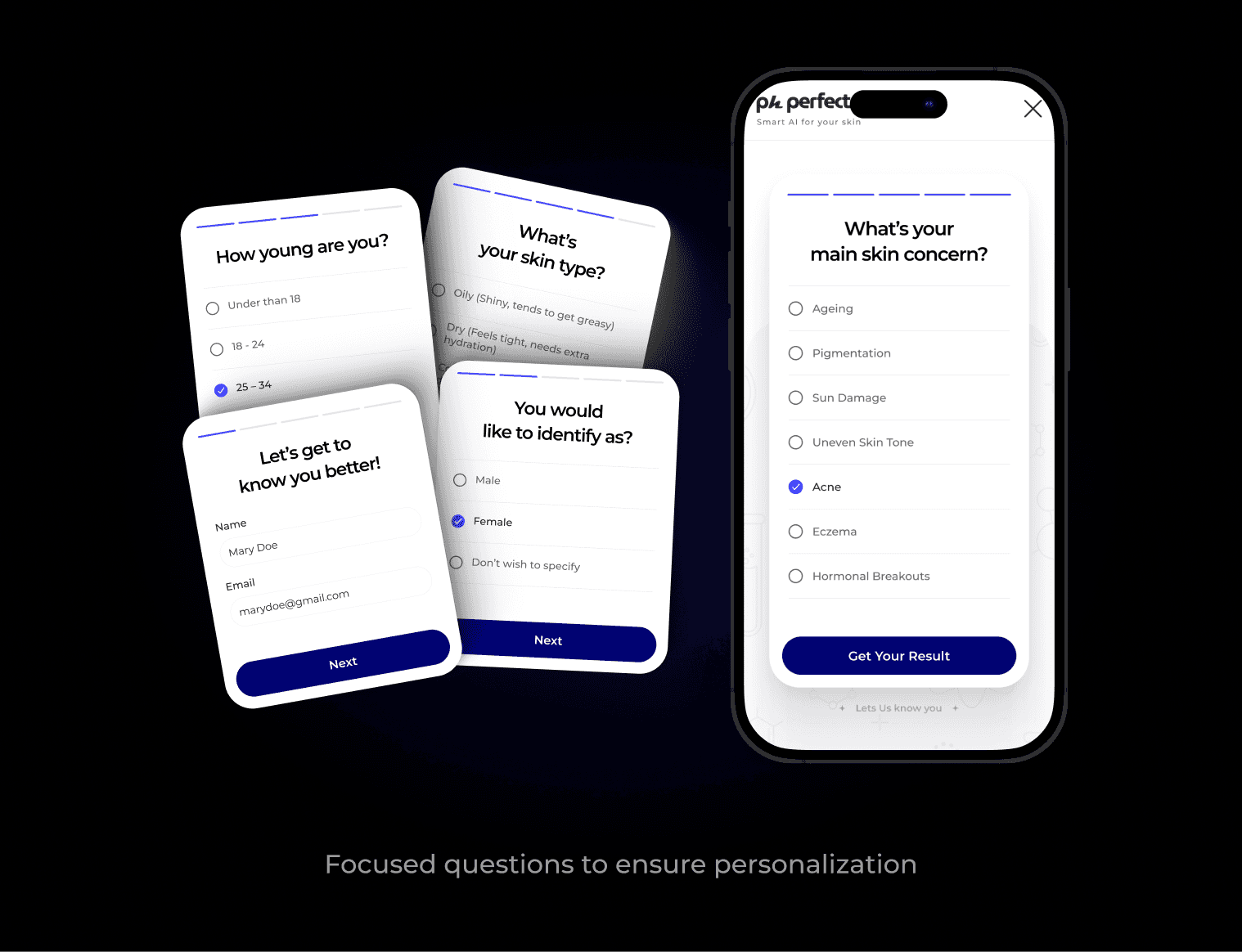
By reducing 15 questions to just 5 essential ones, we achieved a scan-to-solution time of under 45 seconds—perfect for live demos.
Flow improvements included:
Minimal onboarding (5 relevant questions instead of 15)
Clean results page with high-priority concerns shown first
Personalized routine builder guiding users smoothly from diagnosis → products → checkout
60%
Demo time saved by reducing explanation overhead
Major Achievements That Followed
ph perfect quickly became CTRUH’s most reliable demo asset. The prototype streamlined brand conversations, helped secure new client wins, and set a clear direction for how we present our AI going forward. This project proved that for AI products, clarity is currency. The success wasn't just about accurate data, but presenting that data in a narrative the user could instinctively understand—prioritizing trust over raw transparency.
"Clients didn't need me to walk them through every detail. They saw it, understood it, and asked about next steps."
-Sales Representative
Dig into the details
All insights and solutions were translated into a mobile-first Figma prototype. The prototype demonstrates how each design decision from scoring to product recommendations, works together to deliver a clear, actionable, and brand-ready flow.
I’ve attached additional design materials for those who want to explore the process in depth (showing only what I’m allowed to share):
Lessons Learned & Next Steps
The key learning was that for complex AI, trust is built through transparency, not simplicity. We learned that users valued the why (personalized reasoning) more than just the what (the score).
Future iterations will focus on a personalized 'Skin Health Timeline' to gamify progress, and expanding the report with location-based environmental factors.